



Epic Mickey 2: The Power of Two Review
Epic Mickey was an action-adventure platforming game released in 2010 for the Wii. A few years have passed, and the somewhat redundantly named Epic Mickey 2: The Power of Two has arrived, this time for all consoles. Once again following the exploits of Mickey Mouse in a world called the Wasteland as he tries to save this forgotten piece of Disney’s world. While the sequel is still under the vision of designer Warren Spector, it struggles in a number of areas that make this magical trip a little less alluring overall.
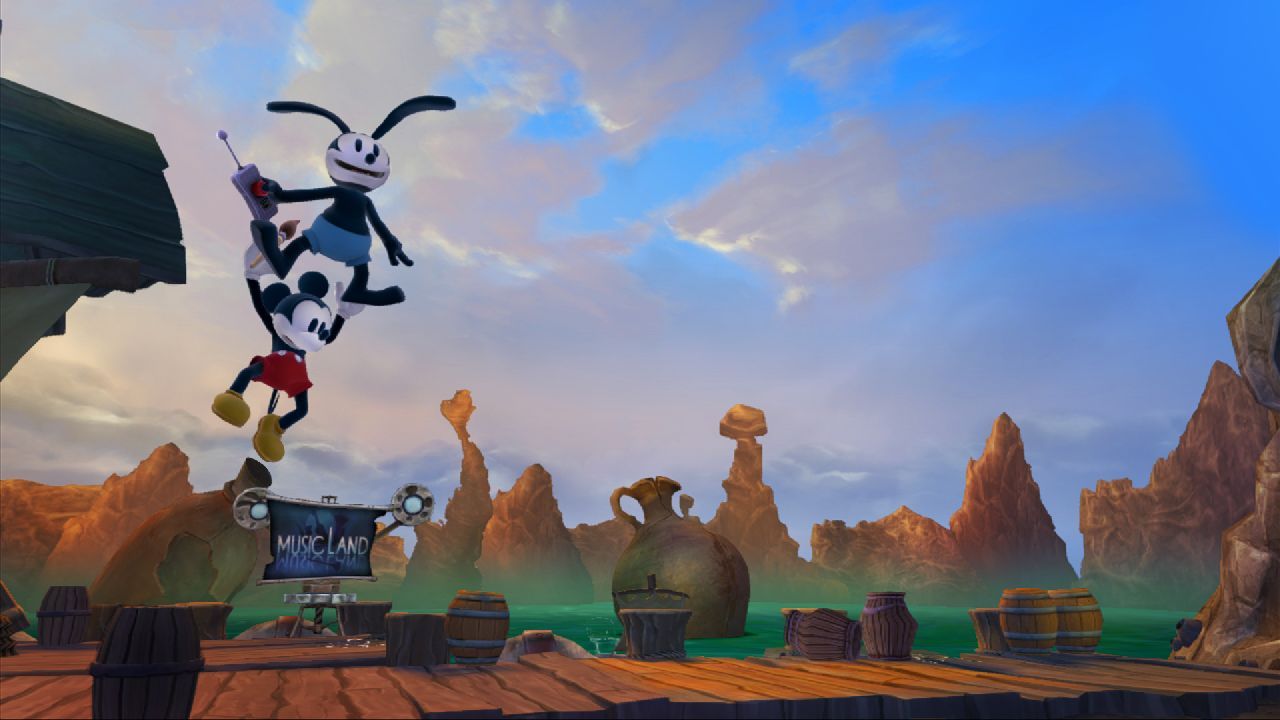
If you’re picking this title up on any platform except the Wii, be prepared to be a little confused. The game doesn’t make any effort to explain the events of the original, and simply throws players into another “save the Wasteland” scenario. Mickey Mouse is once again called upon to rescue this fictional world, this time with his always-ready partner Oswald the Lucky Rabbit. The Mad Doctor returns to the Wasteland, despite having been defeated in the last game, and spends most of the game trying to get Mickey and Oswald to fight a greater evil while, of course, planning something for himself the whole time. There’s not much character development and the narrative focuses on just a handful of events, while the rest of the game is focused on gameplay.
That gameplay, unfortunately, suffers from a number of design and technical issues. Let’s start with the positive – the camera system has been much improved (though this will mean little to non-Wii players who didn’t play the original game anyway), but it still often finds itself in awkward spots. Using either a standard controller or PS Move, you can move Mickey around 3D environments while also controlling a reticule on the screen that acts as your always-on aim. The camera behaves for the most part, but too often tries to offer fixed points of view. The 3D levels are mixed with some 2D platforming sections, which offer great variety and multiple paths to explore. Earning the various currency that you find hidden in destructible objects, you can purchase various items and costumes in town stores.
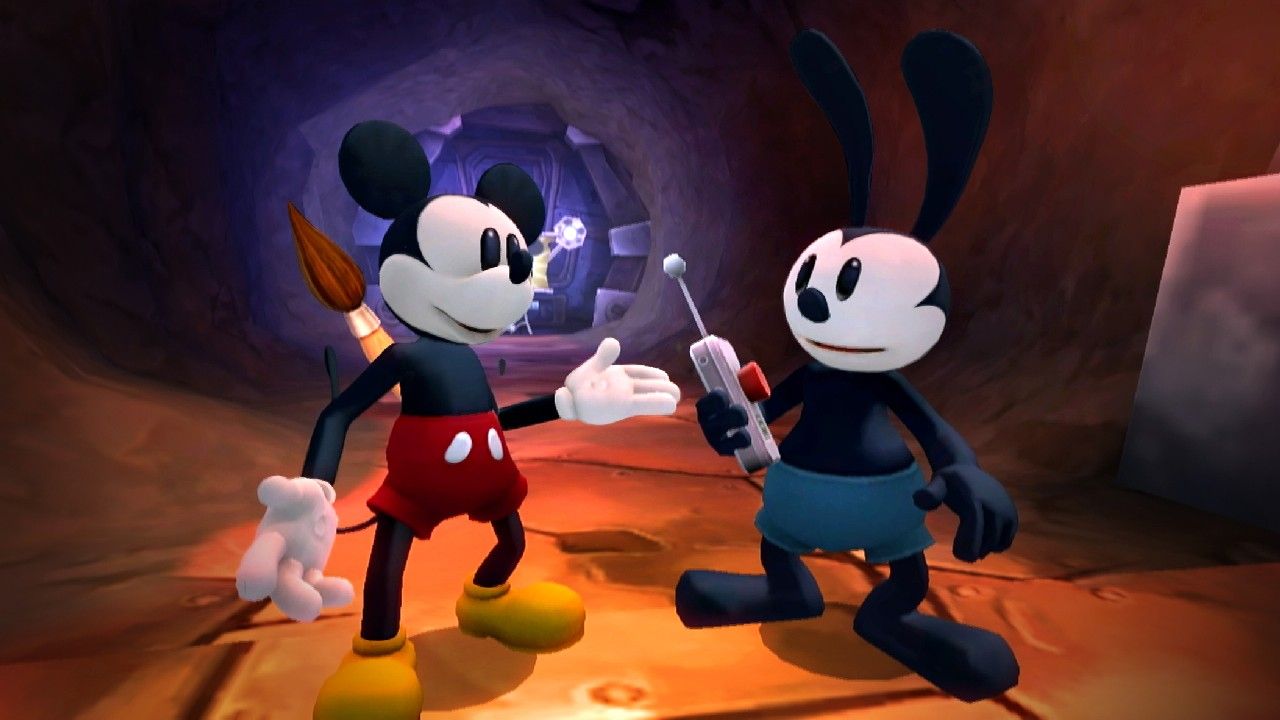
This is where most of the positives end. For the most part, Mickey’s controls feel too stiff and unresponsive, which is obviously a deal-breaker for a game that heavily relies on navigating yourself through the world by jumping and exploring. Both 3D and 2D platforming doesn’t feel very good and results in frequent annoyances of missed jumps. The game world itself consists of various hubs where you’re free to explore the town and pick up sidequests or find collectibles. On paper, this sounds like a great throwback to the action-adventure games of years past, but in reality it is yet another cause of frustration. The game only has an in-menu map, which simply shows your location and where the exits are – there are no in-game indicators for quests or objectives, where to go next, or in fact what you’re supposed to do and where. Because there are often no travel boundaries in the game world, you could walk right through a level to the next one, without realizing you missed the quest, and having to go back. Or worse yet, as was often the case, stuck trying to understand what exactly you’re supposed to do at all or where to do it – running endlessly between a set of levels trying to figure something out.
Thanks to the game’s cooperative focus, as reiterated by the title, Oswald plays a crucial role in the proceedings. It’s too bad, then, that he’s often rather incapable of performing his tasks. In a huge and glaring omission, there is no way to play as Oswald, unless you have a second person playing. There is no ability to switch to Oswald from Mickey, or even just play as him from the start. So instead, you’re stuck with a very simple and often dumb AI partner who can only be interacted with by calling him over. Because almost all of the game’s puzzles are designed to require two players to solve, you’ll be at Oswald’s mercy every step of the way. The AI is very random at following your orders and won’t often do as asked. For better or worse, the game’s combat and puzzles are very easy and simple to execute, so you’ll often be able to get by on your own while the AI is wandering around the level or attacking the same enemy endlessly.
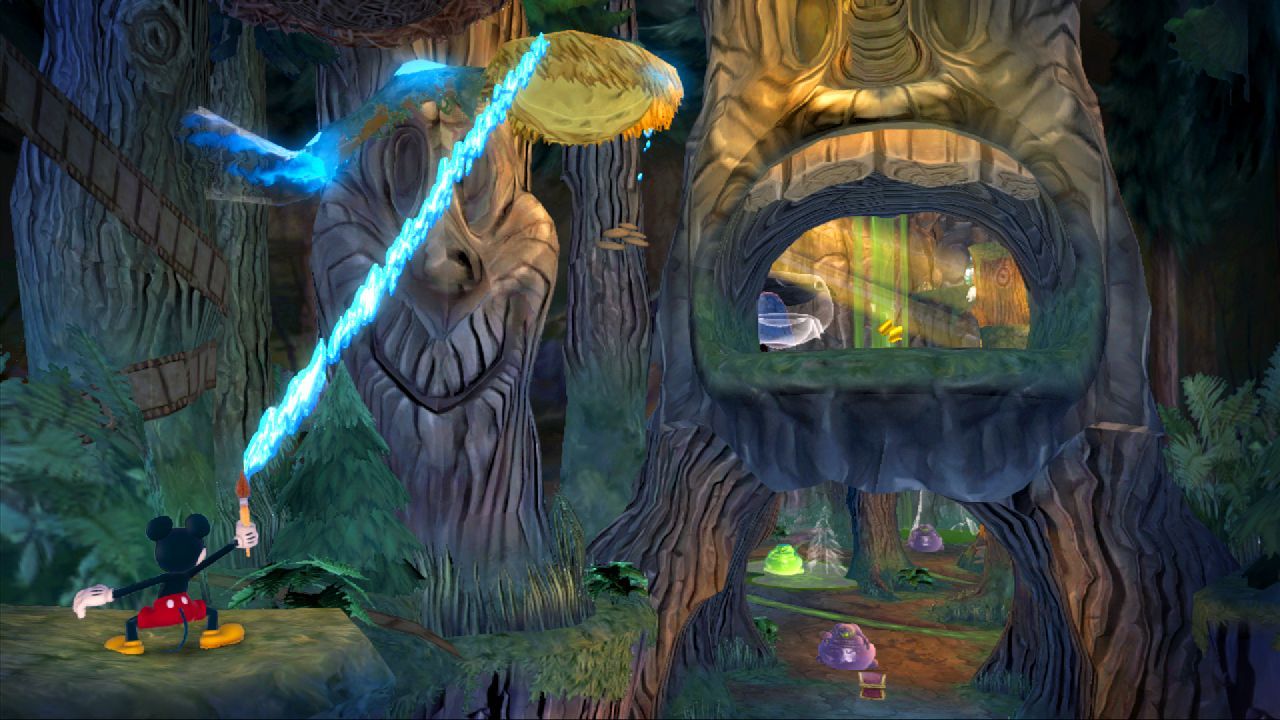
That combat and exploration revolves around two key mechanics of Mickey’s Brush – paint and thinner. Painting objects brings them to reality, while thinning makes them disappear. Similarly, attacking enemies has two varying effects. The game attempts to present the use of these two streams of goo as a moral choice system, but nothing comes of it. Progressing through the game, you learn additional abilities like object levitation and slowing down time. Sometimes you’ll need to paint or thinner a particular part of the environment for Oswald then to interact with – puzzles such as these can be confusing because AI will stand there, doing nothing, as you try to understand what needs to happen next.
The game’s often muddy visuals are root cause of this. Needing to paint a small object in the environment (like a pipe) is often hard to see because it’s transparent to begin with. The technical visuals leave a lot to be desired in Epic Mickey 2, which often looks like an upscaled Wii game. Aside from the excellent and thematic 2D platforming sections and the characters themselves, the rest of the game world lacks any trademark charm or visual Disney design. Similarly, the pre-rendered cinematics have a great visual flair to them, treading the line between classic and modern drawn animation – while in-engine cutscenes pull you back into the low resolution disappointment.
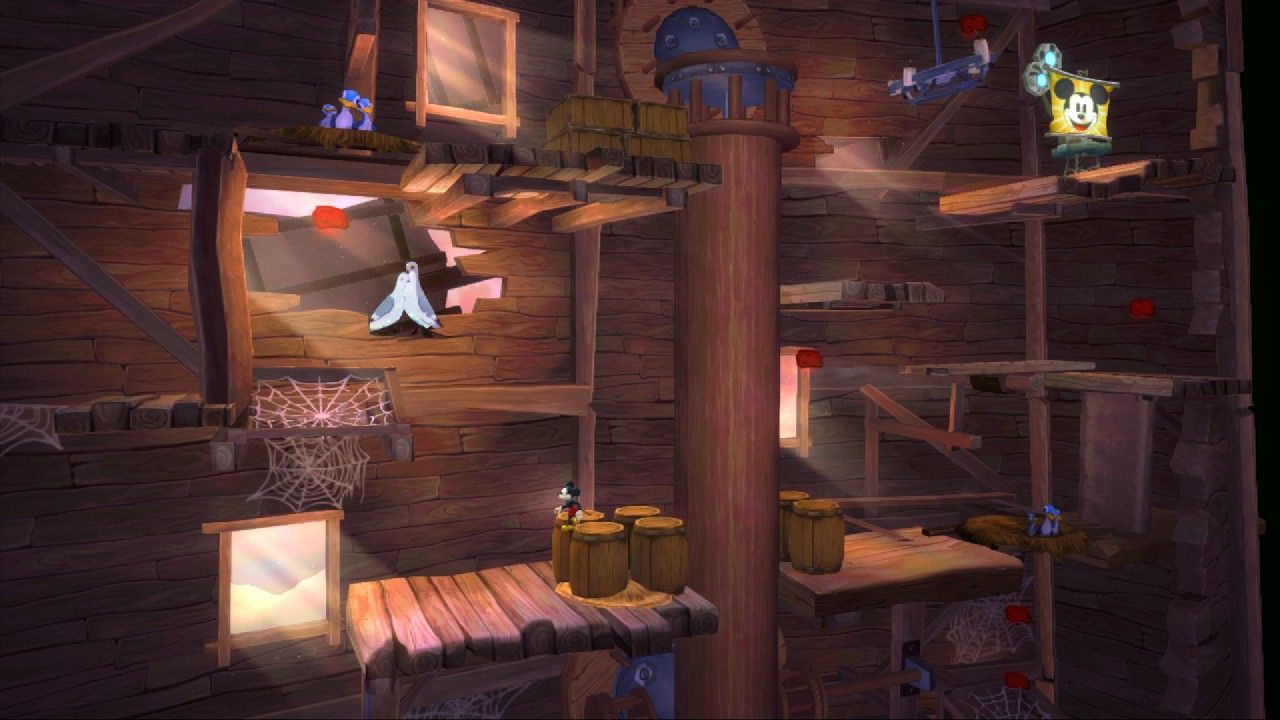
So for most players interested in Epic Mickey 2, it’s a mixed bag at best. It’s nice to see these characters in a video game for the first time in a long while, but this isn’t exactly a return to greatness. The game’s core design is suitable enough, but shortcomings appear at almost every turn –inability to switch to Oswald when playing solo, poor controls, lack of direction, and overly easy puzzles. Cutscenes outside of the engine shine, only to be crushed by the sub-par presentation of the rest of the game. Quite simply put, most of the game feels outdated, and may have stood a chance if it released many years ago. Not even the amusing and well-crafted songs of Mad Doctor can save Epic Mickey 2: The Power of Two from feeling like a very average adventure.