



Botanicula Review
Posted by
FiverBeyond
on
If Botinicula were a cake, you would bake it by mixing in one part Mr. Rogers’ Neighborhood with one part Microcosmos and throwing in a good dash of brightly colored construction paper. More importantly, you would mix it while standing on a chair, wearing an apron that’s too big for your five-year-old build, and you’d probably get through half of the eating by sneaking into the frosting jar and licking globs of batter off your fingers. In other words, Botanicula is the kind of game that’s all about sweet tastes, bright colors, and innocent dawdling exploration. However, the best part about it is that even if you’re secure in your smug, sophisticated adulthood, Botanicula will be able to suck you in and remind you of what it was like to be a kid.
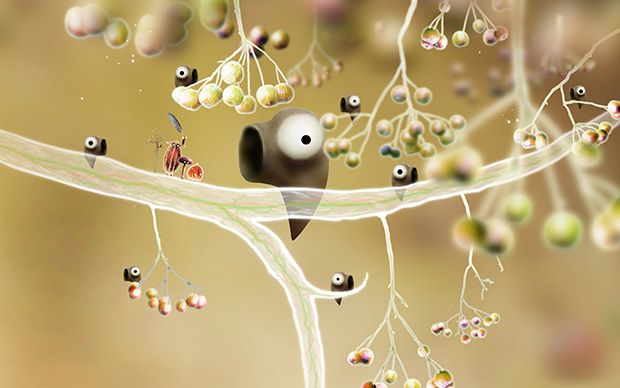
Botinicula follows the adventures of a party of five little insect buddies who team up together to save their tiny tree-home from what should only be described as a ‘verwee scarewee and mean spider’. The story follows your intrepid insect heroes as they start at the top of their tree ecosystem and work their way to the bottom by solving puzzles, advancing a little further with each unblocked door. This typical puzzle game structure is nicely hidden behind the aesthetics of the game: instead of simple doors to unlock, puzzles usually take the form of helping or dealing with other denizens of the tree. You’ll need to find a treat to use as a bribe (or a distraction), or perhaps fix a toy or do a favor. The best part is that even though these tasks may seem simple, they’re never boring, because Botanicula is a game that heavily rewards exploration and interaction. Regardless of whether you’re interested in going on a treasure hunt, you’ll be excited simply to interact with some new bugs.
And I’ll be danged if these bugs aren’t CUTE! Even for a seasoned gun-toting gamer like myself, I couldn’t help but be charmed by Botanicula, in no small part because when it comes to tone, the designers really hit the nail on the head (with a sledgehammer!). The watercolor gradients and simple childlike creature designs mesh perfectly with onscreen antics and friendly puzzling gameplay. The sound is also a perfect fit: these bugs are filled with squeaks, jitters, burbles, and almost-but-not-quite-speech noises that perfectly convey a feeling of innocence and wonder. The music in the game also deserves special mention, not because it’s particularly complex, but rather because it perfectly mirrors the feeling of the game, with a mix of simple sounds, buzzing tones, and children’s voices. It showcases a crisp variety of styles and instruments to match the quirky variety of settings and encounters that the game presents.

Smaller indie games can’t afford to have too much dialogue (requiring a headache of translation work to complete), which is one reason why so many of these games have cleverly figured out how to avoid using words entirely (Machinarium and Limbo come to mind).. Botanicula follows in the footsteps of these games by communicating mostly by symbols and chirps, and it achieves great success here. Even the usually tiny details of gaming have been given wonder expression in this game. For example, if an area is locked off to your party of bugs, rather than simply sticking an invisible wall on your path or even putting up a blunt barrier, your bugs will merrily scuttle offscreen, only to be chased back onscreen by some plump baddy.
The puzzling in Botanicula is a great achievement for an odd reason: it had such a large opportunity to go horribly wrong, but instead went right. That’s because all of the puzzling is focused around trial-and-error or exploration-type gameplay. When entering a room with a puzzle or challenge to solve, it won’t be readily obvious exactly what you’re supposed to do. All you’ll see are some clustered flowers, or maybe a pile of seeds and shells, or (if you’re lucky) a needed key object in some out-of-reach place. On every puzzle, half of your time will be spent figuring out what your goal is, rather than how to achieve it. This sounds like a recipe for disaster, because in puzzle gaming one of the least fun and most frustrating experiences is being stuck without a goal, or being unaware of what tools you have at your disposal. Since you have to click around to find out what different objects in a puzzle do, a badly designed challenge can devolve very quickly into that hideous recurring nightmare of the genre: pixel hunting.
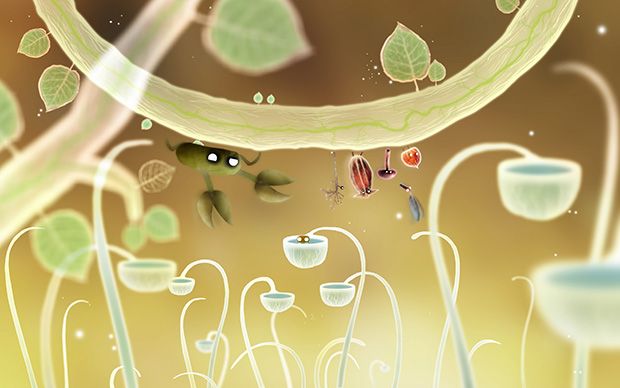
But Botanicula’s puzzles are NOT badly designed. The gameplay never feels frustrating for two important reasons: firstly, puzzle elements are kept very simplified and visual, and secondly, Botanicula rewards random clicking. In other words, there are so many hidden treasures and playful doodads to fool around with that it’s literally a pleasure to try clicking every object in a room. Sometimes you might even stumble across a puzzle solution without meaning to, just from being so absorbed in wondering “What does this button do?” This is exactly the right way to handle this style of puzzling, and it supports the lighthearted and childlike aura that the rest of the game exudes. All the same, it also means that the last phrase you would use to describe this puzzling would be “hard-core”: if you’re looking for a hefty mental workout session, you won’t find it here.
Another area that I grudgingly feel obliged to warn gamers on is this game’s length, which clocks in at barely three or four hours. On most games this would be a point of complaint, even for an indie title, but Botanicula is so nicely polished and has such a high standard of quality that it deserves a pass on this count. The modern use of achievements to boost gameplay hours is often an overrated black mark on modern games, but Botanicula keeps things simple by making its achievements almost entirely devoted to exploration of the gameworld. There are about a hundred tiny no-see-ums to ‘catalogue’ in the game, and the fun of hunting each one down actually makes it worth playing through the game a second time. This is alas the only real replay value in the game (aside from the urge to visit the beautifully realized world).
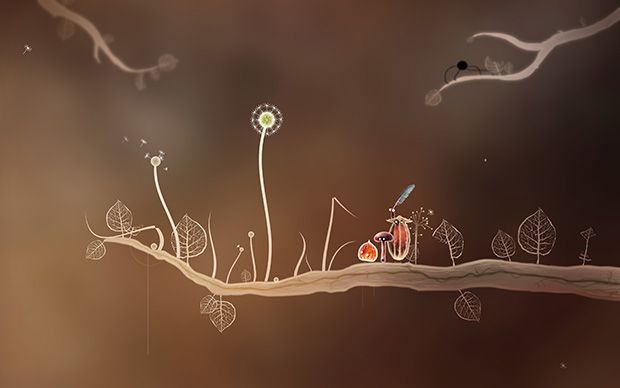
Botanicula creates a world where you’ll want to follow every blinking light and splash around in every puddle. Its intense devotion to a light-hearted tone and glorious visuals make it an improvement even on the very high standard set by its predecessor Machinarium. It’s that rare kind of title that is truly a joy to play for all ages, from toddler to teenager, from whippersnapper to wizened. Although the game is so short that it will only be a flash in your game-playing pan, it’s guaranteed to bring a smile to your lips, no matter who you are, and that’s an achievement worth a special gold star sticker.