



Indie Games Showcase – PAX Australia 2016

“Oh dear.” It wasn’t exactly an involuntary vocalization, but it was certainly appropriate. I did feel a little silly saying it to nobody in particular, though. It’s one thing to look down at your PAX guidebook and notice that the indie pavilion has spread to occupy an ever-more intimidating portion of the expo hall floor, but it’s another thing entirely to behold it on a Friday morning; an uncountable number of stands and booths vying for attention, many still making last-minute additions out of bits of twine and driftwood, their exhibitors eyeing passers-by nervously as demo builds threw unexpected tantrums. How could one person possibly cover all of these? Three days just doesn’t sound like enough anymore.
Fortunately, as it happened, PAX had already gone some of the way to help me with my dilemma. Lined up along the back wall, bathed in light, were six games of particular note; games selected by industry veterans unknown that, I quote “highlight the best of the Australian and New Zealand indie scene”. Together, they were the Australian Indie Showcase; the proverbial stars of the show. If there was any place for me to begin, it was here. Only the best for you, eh reader? Let’s have a close look at PAX’s finest indie games.
Objects in Space by Flat Earth Games
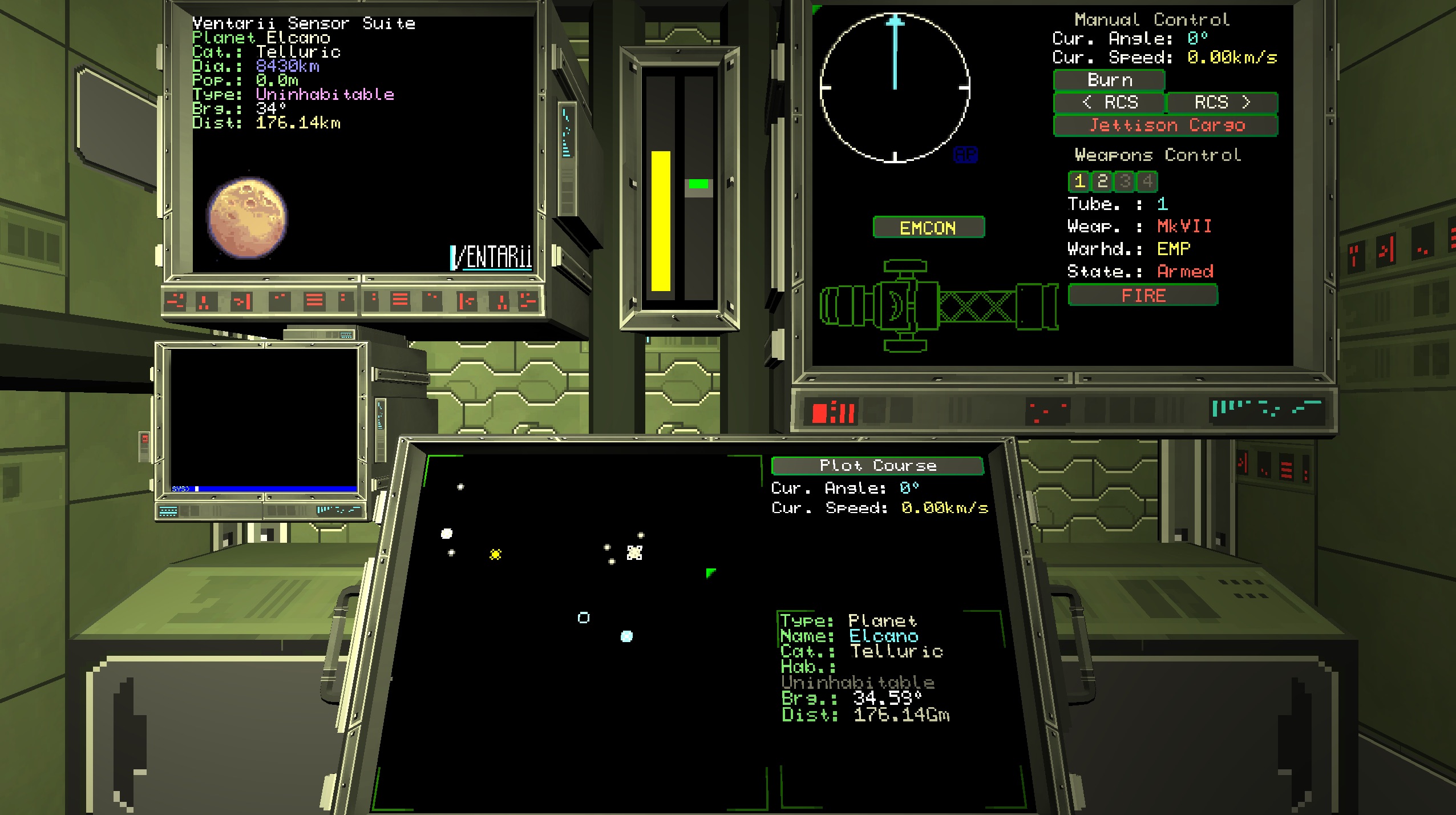
Even if you’re not on the lookout for it, it’s hard to miss Objects in Space among the plethora of clone-stamped indie pavilion booths: it’s the one that screams “get on our level, Steel Battalion” with every inch of its mad, matte-black, garage-crafted control panel. Where most space simulators tend to abstract you away from the hundred or so systems keeping you alive and moving in the inky black void, Objects in Space seeks to immerse you in the nitty gritty details, first and foremost by literally putting you in front of a control panel with more buttons and status lights than a nuclear power station.
There’s a certain childlike satisfaction in being able to physically flip the safety cap and depress a big red button to fire the missiles, but beneath the novelty of Objects in Space there’s a very real sense of hardcore simulation at play; you aren’t so much flying a ship as you are trapped in a tin can full of expensive circuit boards, staring out the solitary tiny window at the boundless void, your pasty face lit up by the radioactive glow of half a dozen chunky information terminals. During the demo I accidentally turned my ship around while exchanging missile volleys with a feisty space pirate, and his missiles vanished off the radar: I only had sensors on the front of my ship. I was blind. Blind, and terrified, and totally unprepared for the EMP when it finally rocked my hull. Thankfully, the pirate’s gently cooling wreckage was already peacefully spreading across the quadrant by that point, so I had time to survey my status lights, take a trip down to engineering, unscrew a circuit board panel, and see if I couldn’t get the reactor purring again. I was no longer in the red, but if I wanted to survive my next battle, I’d have to get really good at parsing the information screens for the telltale energy signature of an enemy’s thrusters. ‘Hardcore’ is an understatement.
The somewhat ironically-named Flat Earth Games have released blueprints to their peripheral and encourage people to build their own—so there, it’s not just a party trick to attract people on the expo hall floor—but to the relief of those of you who can’t solder two wires together without producing a mountain of melted slag, you can play the game just fine with the keyboard and mouse. It’s expected to release before the end of 2016, so start collecting those electronic knick-knacks.
Wildfire by Sneaky Bastards
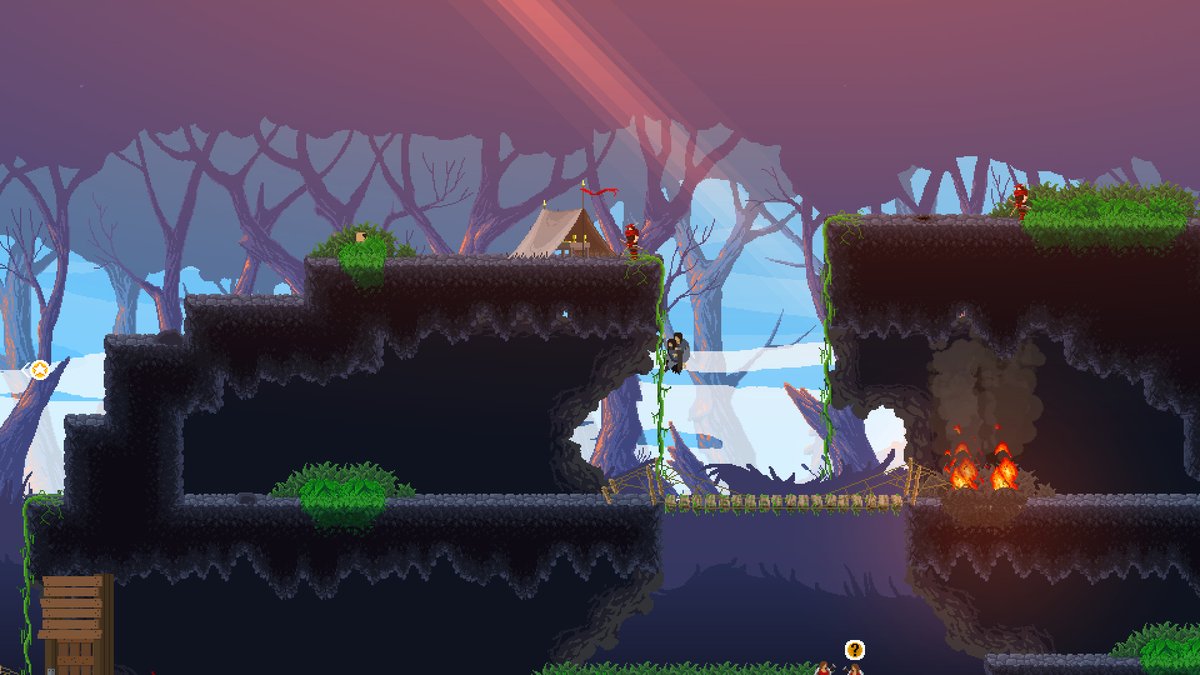
Most stealth games tend to lend themselves well to creeping around in the dark, slitting throats and rifling around in other people’s underwear drawers. Wildfire is more like the stealth equivalent of being trapped in a Rube Goldberg machine gone awry; mechanisms unfurling and interacting in unexpected, chaotic, often deadly ways; set in motion by you, and often biting you in the backside in return. You are a person who gets not quite burned at the stake and subsequently gains the power to sling the elements around like a child with handfuls of soggy toilet paper: water, earth, and of course, fire. Why exactly you need to embark on a quest of vengeance at this point is beyond me, but hey, it’s an excuse to light some soldiers’ pantaloons on fire.
Though short, the demo gave a tantalizing glimpse of the kind of creative problem solving that’s ostensibly at Wildfire’s core. Elements react with each other and their environment in all sorts of useful ways, so it’s up to you to utilise them to tickle the game’s systemic bits and manipulate the situation to your will. Fire burns vegetation, water heals burns, smoke suffocates people, vines trap people, fire makes bobcats blindly back up no matter how many deep pits full of spikes might be behind them, and so forth. It’s all very efficiently, clearly communicated; cascading states compressed into an unassuming little side-scroller. While it’s very possible to carefully orchestrate those states, the most amusing moments of the demo for me were those that were entirely unexpected; accidentally smothering a man by throwing a fireball into a nearby heap of fresh snow, or leaping onto a seemingly-sturdy bridge and smashing straight through to the ground below. I’m no Master Thief, alright?
Exactly how far Dan Hindes, the lead designer and well-known stealth connoisseur, intends to take Wildfire’s concept is as much a mystery to me as it is to you—such is the consequence of playing a demo that consists almost entirely of the tutorial—but it’s flexible enough to go anywhere from tight, subtly-crafted interlocking puzzle levels all the way up to complete and utter pandemonium. Either way, it’s a clever little take on systemic stealth where unbounded chaos is as dangerous to you as it is to everyone else, and I’m looking forward to its full release when 2017 finally rolls around.
Mini Metro by Dinosaur Polo Club
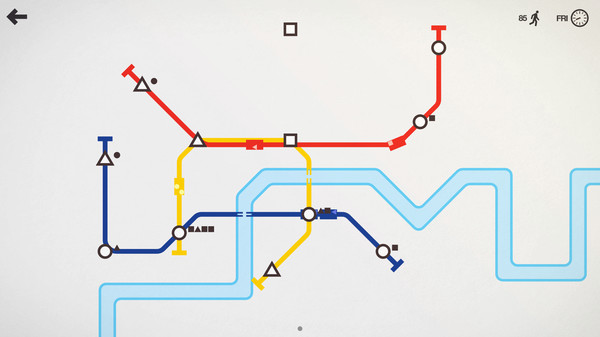
For every person who has ever silently fumed in their cramped, suffocating cubic foot of standing room on an overloaded subway car, here is a chance for you to momentarily sympathize with the poor bureaucratic souls who had to organize it in the first place. You are a railway network planner in a city where new stations just drop fully-formed out of the sky every few days, and you must continuously expand, tweak and prune your collection of subway lines to meet with the constantly mounting demands of the population. Leave too many people waiting at a station too long, and boom, it’s over. No replacement bus services here, darling.
It sounds, admittedly, like the driest variety of urban planning simulator, but there’s something immediately very engaging about Mini Metro. Perhaps it’s the way it gently applies pressure in waves, leaving you just enough time to appreciate your creation running smoothly before putting you between a rock and a hard place, or perhaps it’s its startling minimalism. No spreadsheets, money or expenditure sliders here, only a handful of simple resources and the primitive shapes of a subway map with all the labels sandblasted off. It’s almost intuitive enough to work entirely tutorial-free. Almost. I wish somebody had told me you could reroute tracks once they were laid down, though.
There are a handful of extra modes thrown into the game, such as being handed an existing quote real life unquote subway map and trying to expand on it sensibly, but frankly the core experience seems to stand just fine by itself. Working out whether you enjoy quietly panicking at brightly-coloured squares slowly moving around will be key, but the good news is that there’s no need to agonise over it for months: the game’s been out on Steam for over a year, and is available on a plethora of mobile platforms too.
Paradigm by Jacob Janerka
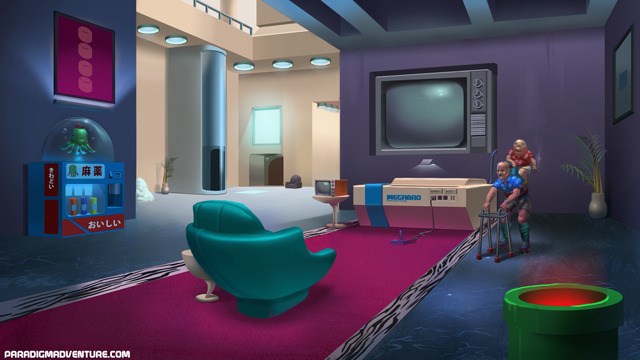
Life in the niche of the point-and-click adventure game is tough, and standing out is tougher still. Paradigm, however, seems to have a pretty good idea of how to achieve that: by being distinctly discomforting, legitimately laugh-out-loud funny, and often just plain weird. You are the titular Paradigm, the gross mutant result of what happens when a company dedicated to genetically engineering perfect prodigy children mixes up their peptides with their Pepsi, and you must… well, get on with day to day life, for starters. That seems difficult enough when you have a head like a rare tropical fungus and you live in the 1980s Soviet Union by way of a surreal fever dream. There’s some kind of sinister plot forthcoming to worry about, but first things first, eh?
While the vertical slice I got to experience of Paradigm was small, it pretty clearly communicated the LucasArts-style design philosophy that Jacob Janerka has been aiming for: fun writing, oodles of imagination, minimal frustration, and very few chances to kill yourself by walking off a five pixels wide ledge. After experiencing the “live-action dog tutorial” (trust me, it’s worth it) I proceeded to plug in a dating AI and get it warmed up with a sex-ed vinyl record, after which it finally agreed to Google my computer woes for me. While being confined to one room did make the puzzles seem a little too straightforward—thing is missing component, find component; character wants music, search through box of music—the offbeat flavour text and dialogue trees were a pleasure to dig through. Shame the voice acting rubbed me the wrong way, but maybe I just need to adjust to Paradigm’s somewhat naive Eastern European cadence. Also there was a sloth regurgitating a candy bar for some reason, which is… a plus?
The fortunate thing about point-and-click adventure games, though, is that you can more or less guarantee that they’ll behave the same way the whole way through: talk to characters, click on surroundings, and rub things together until the path to progress beckons. Thus, even with just a short look, I feel confident in saying that if Paradigm can keep up the same level of creativity for an entire game—and avoid bloody stupid gimcrackery, of course—it’s well on its way to success. If all goes according to plan, you should be hearing about it again in January 2017.
The Adventure Pals by Massive Monster
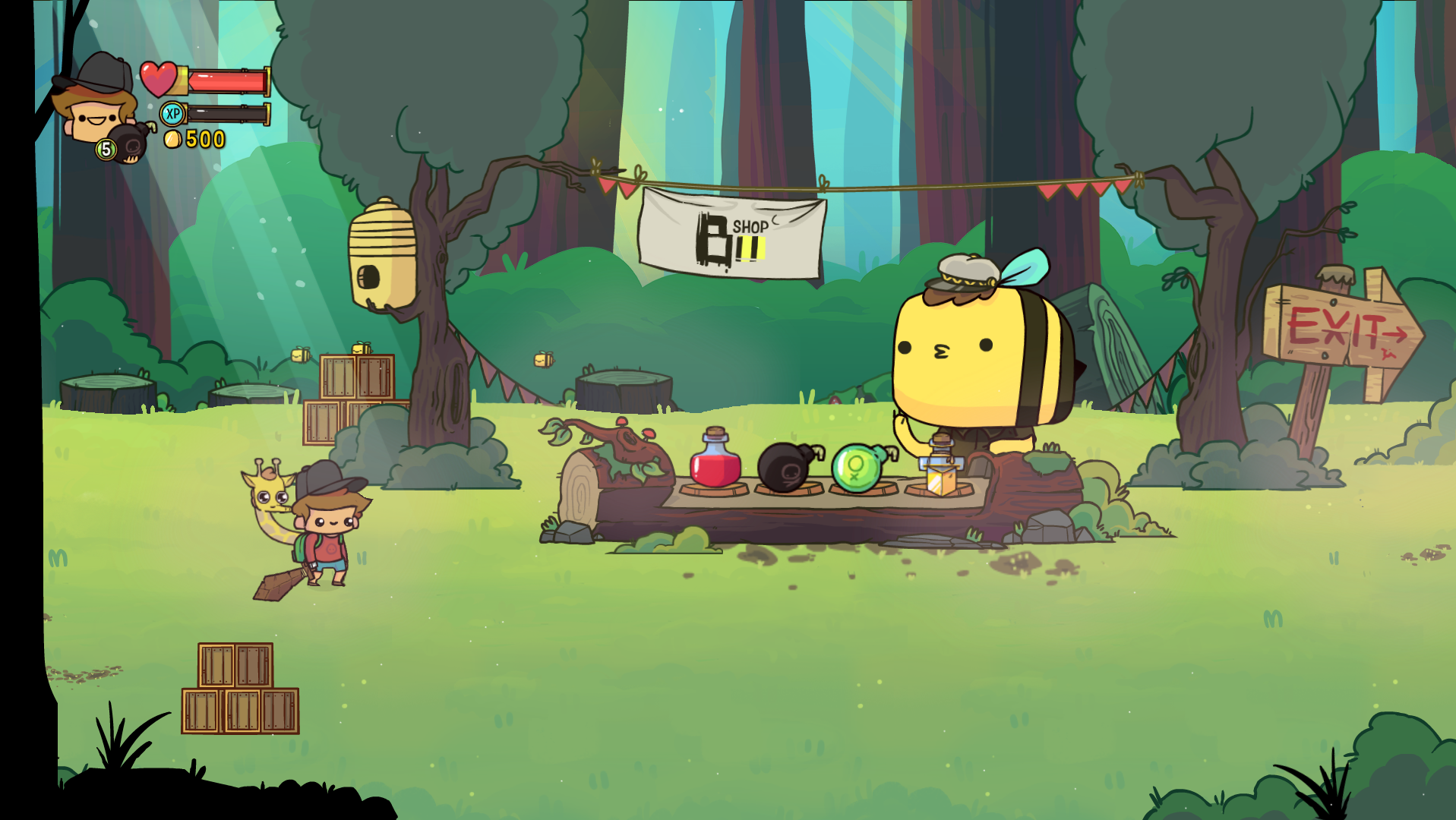
“If we can let The Legend of Zelda get away with the premise of ‘small child goes on epic quest to save world from violent megalomaniac’ in 2016, then we can sure as hell let this get away with it”, I said to myself, looking upon the saccharine rainbow-spouting spectacle of The Adventure Pals. A side-scrolling platformer/brawler/thing with a serving of RPG on the side, The Adventure Pals seems primarily designed to recall times of exploring the great outdoors as a kid while being cheekily irreverent with as many grand adventure tropes as possible. Your grandfather’s been kidnapped! Oh no! And he’s going to be turned into hot dogs! How shocking! Take up your wooden sword, mount your pet giraffe, and venture forth, brave child! Alright, so the game’s sensibilities aren’t for everyone; they’re born out of the kind of sugary, fluffy ‘so random’ mentality that’ll just as quickly jangle its keys in your face as tell an actual joke, but it’s nice to be spoon-fed some light-heartedness once in a while.
A stranger and I both reached for the controllers simultaneously, putting the game’s optional co-op to the test: could it foster friendship between two people who have never met and have no means of communicating other than vague gestures and nervous laughter? The answer is a resounding “yeah, sure”. Despite the art style the game feels distinctly like one of the more solid 16-bit platformers that eschewed the ‘just keep moving right’ mentality; explore, beat up dudes, find secrets, collect coins, get to the exit, all with the knowledge that you can let your little brother drop in at any time. The combat didn’t feel particularly nuanced—keep hammering attack until everything in front of you dies or you’re forced to dodge—but we were, after all, in the first level of the game, and the ability to toss bombs around certainly livened things up a fair bit. Perhaps The Adventure Pals is squaring up to be a Battleblock Theatre-like of sorts; a kooky side-scroller where betraying and abusing your pals is every bit as fun as cooperating with them. We’ll just have to see, I suppose. Bring on 2017.
The Eyes of Ara by 100 Stones Interactive
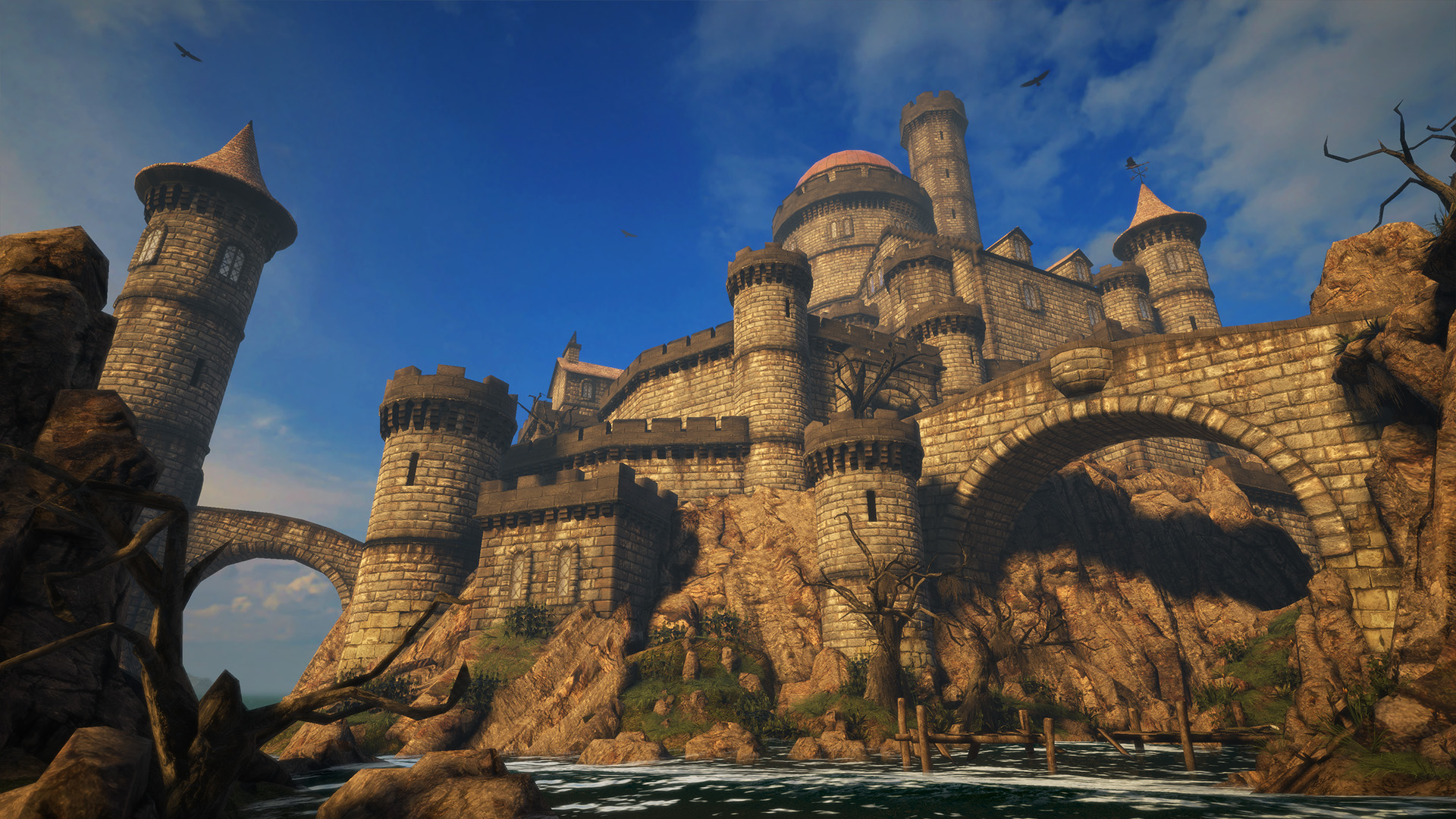
Without the novelty factor of full-motion video I think we can agree that Myst was little more than the blood-flecked choking coughs of the PC adventure game breathing its last, but it did have the redeeming quality of letting you poke at opaque, mysterious, obtuse mechanisms made for unknown purposes, an experience that I’ve had a soft spot for ever since getting lost in the local Harvey Norman as a child. The Eyes of Ara, a Myst-like in all but name, leads off on the right foot by punting you head-first into a mysterious castle, with promises of mad science and spooky radio signals aplenty. Nobody’s seen the eccentric owner in years, and when even the front door requires you to recover and reassemble two halves of a cog, it becomes apparent that finding him is going to be no mean feat.
And so I prodded my way through the demo, toying with trinkets and machines until they bared their secrets. The controls are simple and accessible; the mouse is your hand, and it’s your job to use your hand intelligently. Can I press these buttons? Can I swipe this from side to side? What moves, and how does it move? The game doesn’t abstract you away from such questions, but makes them problems in themselves. While the environments felt a great deal less interactive than one would expect—the vast majority of the lovingly-rendered clutter is merely so much set dressing—they did make it a lot easier to home in on relevant clues and items than if I’d been permitted to flip through every last book on the table. The demo culminated with me placing four ornate knives into four sheaths hidden around the room, which released the safety cap on a big red button on a podium, which in turn caused an enormous staircase to slowly rotate into place, granting exit. It made absolutely no sense, and yet in its own strange way, felt completely intuitive.
The world needs more games about exploring spooky castles full of secrets built by madmen, and the good thing about The Eyes of Ara—as far as I’m concerned—is that not only does it seem to fully satisfy those criteria, but has done for quite some time; it’s been out on Steam since July, and I suspect the demo available on its page is very much the same experience as the one I had. Go see if it’s your kind of thing.
Personal picks
Of course it simply wouldn’t be fair to leave such a celebration of indie effort and talent there. It wouldn’t be fair to you, the attentive reader; it wouldn’t be fair to the legions of developers who didn’t get the convention’s spotlight on them; it wouldn’t be fair to me, the nerd who needs to desperately brag about the video games he played so that a weekend of sore feet and loud noises didn’t feel totally meaningless. To cover everything equally would be madness, so I have instead elected to cover things with as much bias as humanly possible. Here’s my Australian Indie Showcase: six games that I played at PAX Aus and am now looking forward to with bated breath. You trust this writer’s taste, don’t you?
Kieru by Pine Fire Studios
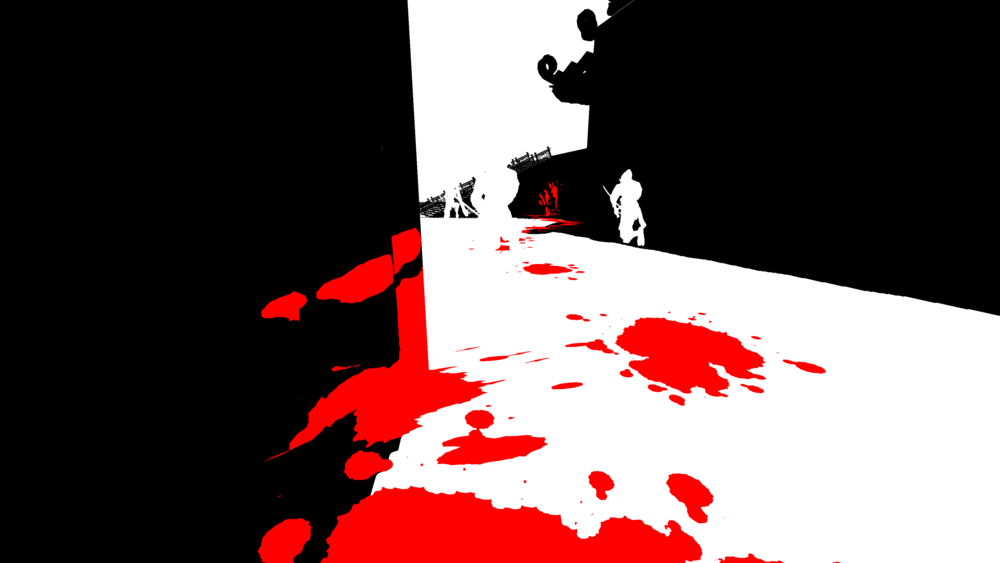
The problem with stealth is that almost every fun stealth game ever created is predicated on your enemies being slow, dull-witted, and in dire need of a visit to the optician, which obviously creates problems when you introduce that formula to a multiplayer space full of twitchy, perceptive players who crank the brightness on their monitors all the way up and never attribute sudden noises to rats. Kieru has a novel solution to this: ninjas fighting in a binary black-and-white world, constantly on the move, perfectly invisible as long as they’re viewed against a surface of the right colour. Stand with your back to the sky as a white ninja and you’ll be able to hide in plain sight; crouch in the shadow of a pillar as a black ninja and you’ll be poised to leap out at unwary passers-by. Simple, but surprisingly effective.
It wasn’t until I managed to hog a controller for a few rounds of team deathmatch, though, that I was convinced Kieru is onto something special. It’s an experience that demands acute spatial awareness in a way that few multiplayer games can lay claim to; you’re constantly thinking of your surroundings and how you appear against them from different directions, wondering if you’re as invisible as you feel or if somebody’s creeping up on your laughably obvious silhouette even as you scan the environment for telltale signs of movement. It’s possible to camp in safe patches of your own colour, of course, but with the ability to blink-teleport and charge attacks the game feels like it rewards aggressive guerrilla attacks and clever deception over crouching in a dark corner for hours. Admittedly, once everything falls apart skirmishes do tend to devolve into the typical first-person melee mash-em-up, but a bit more depth to the combat or extra weapon types could easily clear that up. Also I fell off the stage a few times because—surprise, surprise—a world made up entirely out of two colours isn’t always the most readable.
Whether Kieru will remain a cute curiosity or actually pick up some serious momentum will, I imagine, depend on those classic mainstays of first-person multiplayer stamina—maps, modes, fresh ways of looking at the formula—but its stylish marriage of tense stealth action and rad aesthetic sensibility has me interested in multiplayer deathmatch in a way that no game has managed in quite some time. There’s no release date to speak of yet, so keep your senses keen.
Aura of Worlds by Cognitive Forge
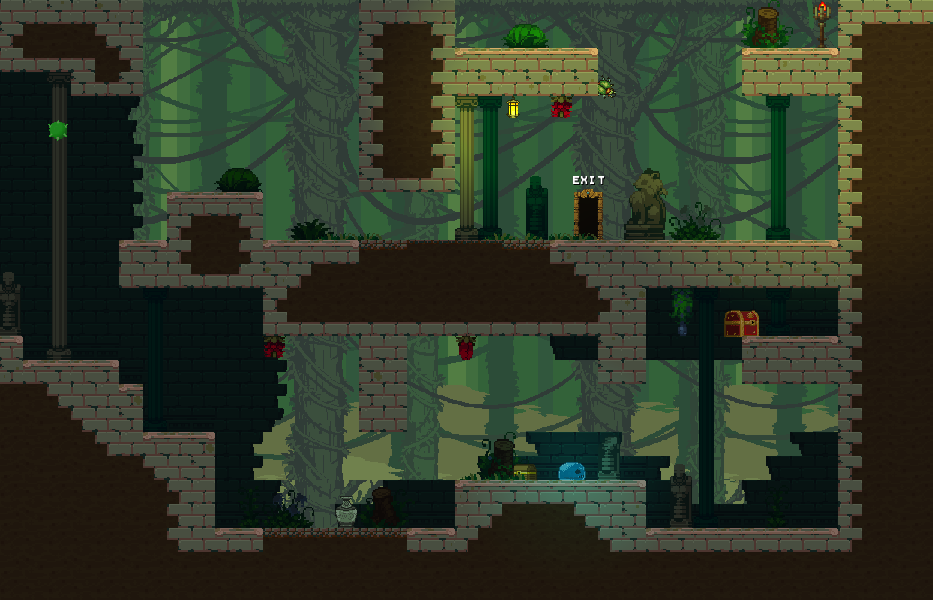
It’d be ever so easy to declare Spelunky to be gaming perfection and accept that no roguelike platformer will ever reach the same dizzying heights of design purity, but there’s more than one way to line a spike pit. Aura of Worlds feels like the creative antithesis of Spelunky, in a good way: a colourful intersection pile-up of systems and edge-cases where unexpected results are just the way of the world. In a way, it’s a rejection of the ‘rogue-lite’ philosophy, returning to the old-school Nethack-style approach of taking a simple base and loading it down with a monstrous number of mechanics. The fundamental premise is familiar—run, jump and fight your way to the exit door, repeat through increasingly difficult floors until permadeath or success—but there’s so much happening that it can’t help having a thoroughly different flavour.
First impressions were overwhelmingly confusing. That’s good; it means there’s plenty to learn. You start your adventure with a randomly selected loadout of gadgets and weapons—crossbows, daggers, grappling hooks, bombs, force-repel, that sort of thing—and are thrown into a dungeon full of traps, loot and miscellaneous items full of unpredictable interactive potential. I grabbed a lantern early on, because no self-respecting tomb-plunderer should go anywhere without a light source to gingerly hold in front of them, but after being bombarded with an enemy’s toxic spittle I threw it at the ceiling in panic, causing globules of fire to rain down on myself, my foe, and just about everything in the immediate vicinity. Poisoned, burning, and very bewildered indeed, I picked up a nearby pot, which turned out to be possessed and immediately tried to fling itself at me. Diving into a nearby dark pool seemed like the safest bet, and at least in the short term it was, but the mines floating in the gloom near the bottom quickly put an end to my optimism—as well as most of the surrounding terrain.
I feel like an anecdote of events as they happened, more than anything else, communicates what excited me about Aura of Worlds: a sense of dizzying variety and orthogonality where everything has a conceivable use against everything else. My playthrough ended in swift abject failure, as one would only expect, but with more experience I may have been able to dream up more creative solutions to my problems (or at the very least, formulate some utterly broken strategy out of the loadout I was gifted). Keeping up that kind of interconnected novelty is a daunting task, both in terms of organization and pure man-hours—which probably explains the dangling question mark over the release date—but when Cognitive Forge finally emerge with a finished product, I can’t wait to see all the embarrassing ways I’ll end up dying in it. Over and over and over.
Desync by FOREGONE
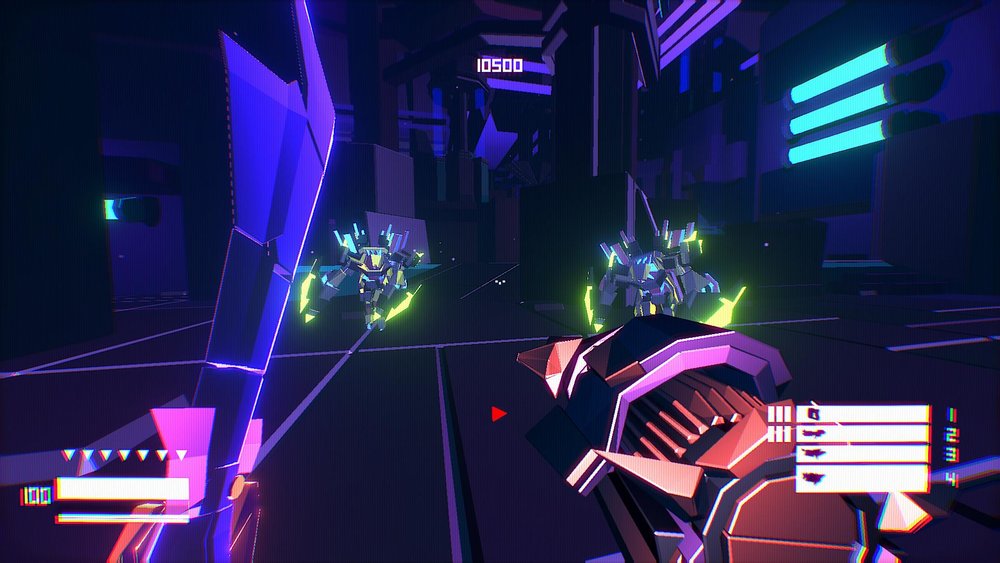
When it comes to first-person shooters, I am nothing if not a shameless show-off. If you give me grenades, I will try to bounce them. If you give me bullet penetration, I will fill every wall with head-height holes. If you give me a rocket launcher, I will use it to soar through the air like a majestic trapeze artist, even if I have nothing to land on but the two bloody stumps where my legs used to be. Desync, an unforgiving fast-paced first-person shooter with a focus on combos and trick kills, looks set to do what Bulletstorm didn’t, and awake the showboat in all of us. I haven’t the faintest idea what its justification is for slaughtering synthwave demons in a virtual cyan-and-magenta purgatory, but frankly I would find it extremely hard to care. Let us dance, my dear.
And dance I did, after a period of adjustment to the slightly unintuitive controls, which have to account for the fact that at any given time you could need access to up to four distinct ‘fire’ buttons. You’re rewarded with coming up with creative or impressive kills—blasting an enemy into spikes, killing multiple enemies with a single shot, launching an enemy into the air and then making their gibs rain down over their grossed-out peers—but since you can dual-wield weapons and move like Doom’s nippy space marine, rather than Bulletstorm’s tubby has-been space marine, you’re able to more naturally set up and engage on a wider range of opportunities. A distinctly PlatinumGames-y flavour infuses the combat flow, locking you into discrete arena fights throughout the level and handing you a score card when the last living foe gets splattered across the floor, but the game looks prepared to keep the routine fresh with a plethora of mutators, which can put special properties on enemies—letting them, say, slow you down if you stay in their vicinity—or put certain conditions on the entire fight, like “don’t get hit, idiot” .
Needless to say, I got hit. Repeatedly.
It’s rare to play a first-person action game that doesn’t feel like a new skin stretched over an old, all-too-familiar formula, which is why Desync felt like such a pleasant surprise on the show floor. It’s a very distinct experience working with a handful of ideas that are almost entirely alien to the genre and making them feel very natural indeed. There’s no point pretending it’s for everybody—even among fans of fast, old-school shooters, I have a feeling it’ll be divisive—but if you pride yourself on the speed of your trigger fingers and the deftness of your dodges, watch for when it hits in early 2017.
Return of the Obra Dinn by Lucas Pope
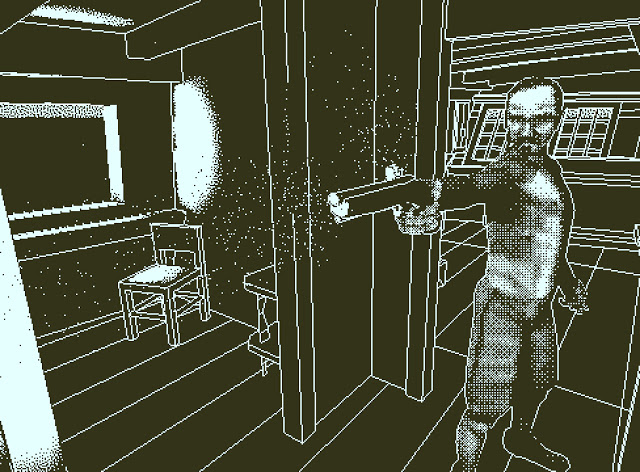
From the blazing fast to the glacially, excruciatingly slow, Lucas Pope’s precious new child is a curious game that shows he is by no means concerned about replicating Papers Please’s commercial success. Buried under a weirdly anachronistic monochrome shader that makes the whole experience look like it’s playing on some theoretical superpowered early Macintosh, Return of the Obra Dinn is first and foremost a mystery game: you have boarded the deserted Obra Dinn, armed with a pocket watch that can recall the final moments of a person’s death, and you are tasked with determining the fate of the ship—including her entire crew—using only observation and deduction. Good thing there are a lot of skeletons around, eh?
This ain’t no Gumshoe detective job, either: I was parked in front of that demo for a good twenty minutes, at the very least, and I had yet to even make a dent in the seemingly insurmountable task before me. You’re handed a plethora of documents to write notes in, so you can put a tentative “killed by extremely tight breeches?” next to a crewman’s roster entry or attempt to match a name to a face in a grainy photograph, and it soon becomes apparent that you’ll need to fill out as much of it as possible to make any logical elimination possible. Diving into death scenes reveals minute details to be pieced together, often involving many characters at once, and even with the documents the game provides, I strongly suspect I’d need a pen and paper to get anywhere. This man was stabbed, yes, and this man was injured in the resulting scuffle, but the fellow who was hiding on the ledge outside finished him off. Now if only I knew who any of these musclebound seafarers were.
Dull? For many, undoubtedly yes. The booth certainly wasn’t crowded, I can tell you that much. Nevertheless, Return of the Obra Dinn feels special—if only for its utterly unique presentation—and it’s a game that feels determined to draw you into a bottomless whirlpool of questions, the depths of which you can’t help but plumb. Why is this man here? What feud led him to be bludgeoned to death with a fence post? How does somebody with such a gravelly voice not come standard with an imposing black beard? How many demo builds of this are we gonna see until it’s deemed good to go?
Ticket to Earth by Robot Circus
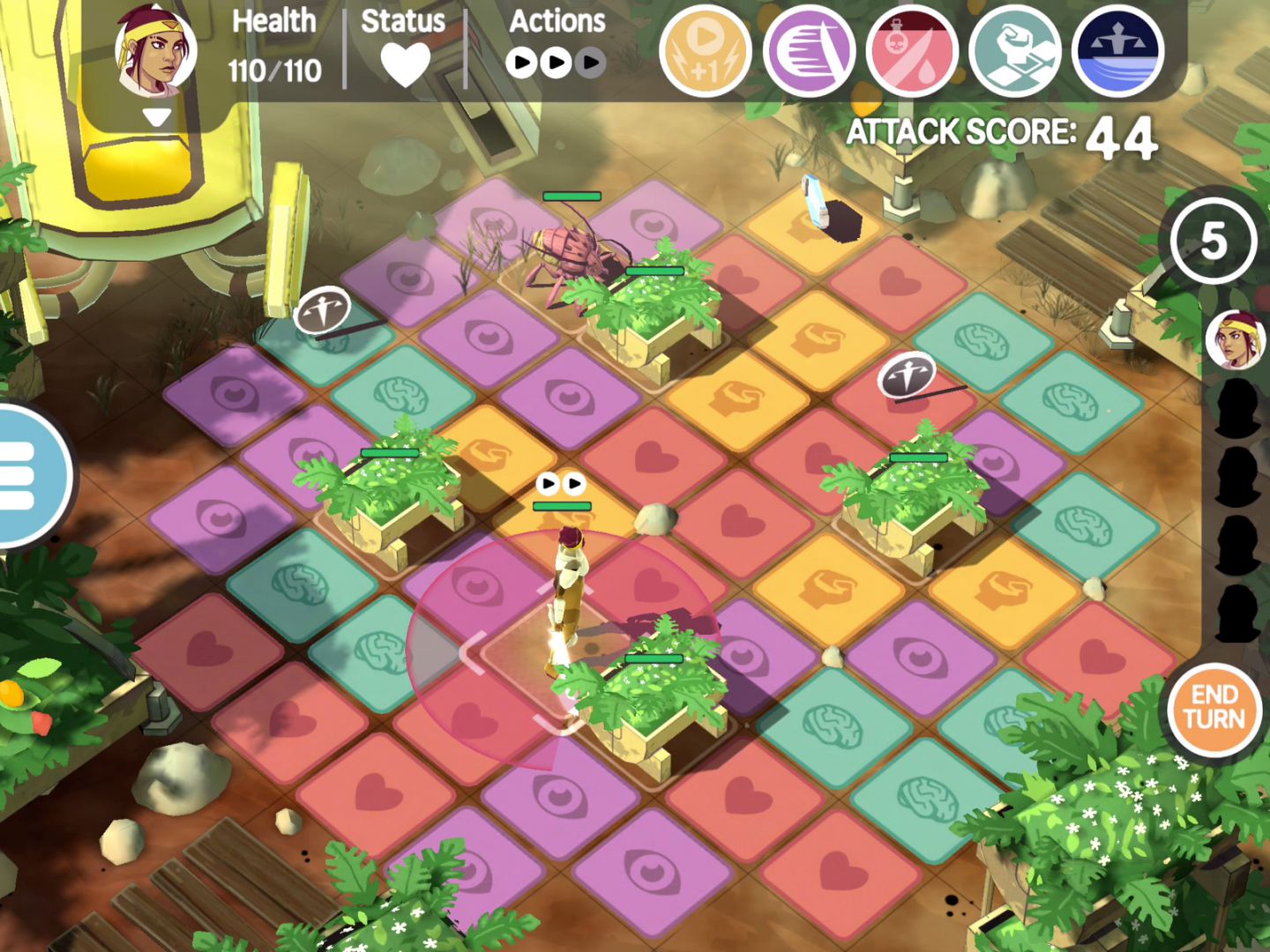
Much like the Moon landings of the last century, there’s always a chance that humanity will eventually get fed up with the hassle of colonizing Mars and elect to simply return home, like a fair-weather party-goer who starts dialing a taxi the moment the host runs out of mini quiches. Ticket to Earth is about one such post-mining-boom scramble, focusing on a small collection of characters and their efforts to get off this barren red rock—or, to be more accurate, their efforts to draw lines through as many tiles of the same colour as possible. It’s a puzzle strategy game vaguely reminiscent of XCOM if they took out most of the cover and replaced it with an obligation to run around the battlefield picking up powerups, and despite only encountering it a quarter of an hour before closing time, I risked getting thrown out to play it for as long as feasibly possible.
The premise is simple enough: coloured tiles litter the battlefield, and you can only move by drawing a squiggly path through a set of tiles of the same colour as each other. Each colour tile grants some form of buff to your character for the duration of their turn—more damage, more range, more health, more brazen machismo, etcetera—as well as charging up that character’s special ability of corresponding colour, so you’ll want to find paths that pass through as many tiles as possible while still putting you in a good position for combat. Somewhat rarely for a strategy game, it feels like there really are a multitude of approaches to fights, from conservative positioning-driven moves to wildly hoovering up tiles and blowing them all on abilities, and while the demo only showed off a handful of characters, the majority of them had immensely satisfying abilities to toy with. Tiles get randomized to some other colour once they’re collected, so the battlefield is constantly changing structure, opportunities coming and going on a whim. It’s the kind of game where you could carefully feed a lot of factors into each decision, or just lazily trace your way around the board and see where things take you.
Because of this—or perhaps because of the vaguely “match the colours” overtones of the central mechanic—it’s no surprise that Ticket to Earth is coming to mobile platforms first, sometime before the end of this year, but if all goes to plan it’ll be crossing the intergalactic gulf to desktop and consoles soon after. Don’t be fooled by the presentation: it’s smart, and I’m all too ready to mine out its depths.
Dusk by David Szymanski
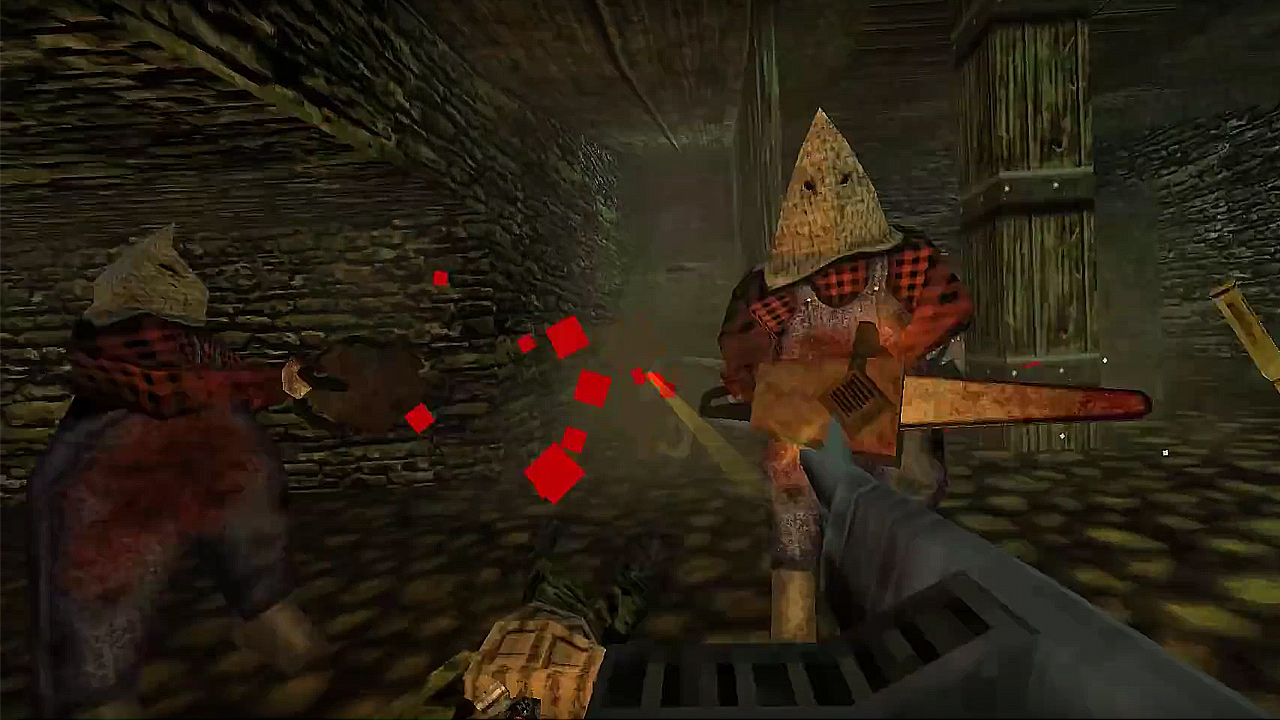
“Another retro first-person shooter?” I hear you ask, your sigh breaching the gulf of time and space with its unbridled exasperation. “Don’t you ever get tired of these?” Well yes, of course, but there’s plenty of room to explore in that space, and Dusk feels like a breakneck detour into a side-alley that few of its contemporaries have explored. Where similar experiences sought to recreate the speed, exploration and pulse-pounding action, Dusk adds a focus on recalling the lovable jankiness, scrappy presentation and unintentionally surreal environments of the era. It’s a celebration of missteps and stumbles, one that’s able to present them as endearing without letting them take over the experience.
So yes, at its core the demo I played was very much the usual run-shoot-frag-bunnyhop-circlestrafe-athon I’d been lead to expect, but with a distinctly honest flavour to it. You move at a rate that’s frankly too fast for many of the interior spaces, which are often eerily stark or characterized by a precious handful of polygonal details. The sky is very clearly a flat repeating texture, as are the trees and the ground, all of which can get somewhat mixed up when you end up flipping upside down because there’s nothing locking the camera pitch. Enemies disjointedly range from chainsaw-massacre-wannabes to inexplicably hostile soldiers in full camo, and they all gib satisfyingly when you give them a taste of the requisite super-shotgun. There’s an intriguing morale counter, which might be a fancy armour system or might be something else entirely, and the weapon arsenal feels wonderfully thematically inconsistent. A medieval claymore and an assault rifle? Why the bloody hell not? I’ve yet to see a convincing argument for why the UAC had a chainsaw on Mars.
In short, Dusk’s demo felt messy. Not messy in a lax, rough way; messy like a game exploding in five different directions that are all just close enough to tie cohesively together. In a sea of love letters to the past, it’s one of the few to acknowledge its lover’s blemishes, and gracefully accommodate them as an important part of its identity. There’s no way of knowing when David Szymanski will be bringing his gib-tastic baby into the world—other than a depressingly vague ‘2017’ on the Steam store page—but however things play out, it’s just one more reason why 2016 can feel free to get out of our lives.
Video games are alright.