



Tales of Xillia 2 Review
Most sequels spend as much time as possible showing you what’s new, special, and better than the original. The idea of going bigger and better is usually what a sequel is all about. What makes Tales of Xillia 2 standout from the normal evolution that so many series go through is that it doesn’t really try to be larger and superior. For better or worse, it’s really just Tales of Xillia with a brand new story.
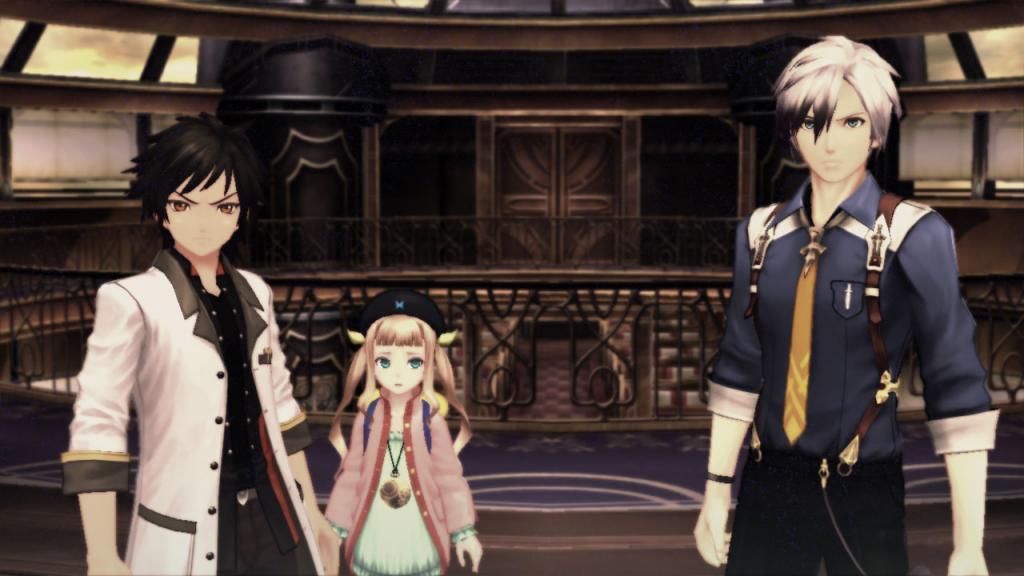
Picking up a year after the events of the first game, Tales of Xillia 2 follows the story of Ludger, a young man who gets wrapped up in a multi-dimensional dilemma when he runs into a little girl named Elle. Elle holds the key to Canaan, a mysterious place that supposedly will grant the wish of anyone who enters. Together, they’ll have to join forces with the Spirius Corporation in order to stop fractured dimensions from stealing the life force from their world. Only then will they be able to enter Canaan. Sounds a bit convoluted, doesn’t it? While I don’t think the story in Tales of Xillia 2 is as good as the original, there’s certainly a lot more going on that kept me engaged for my 30+ hour experience. Some JRPGs fall into slogs where nothing really happens for hours, but in Xillia 2, nearly every chapter comes with a new revelation.
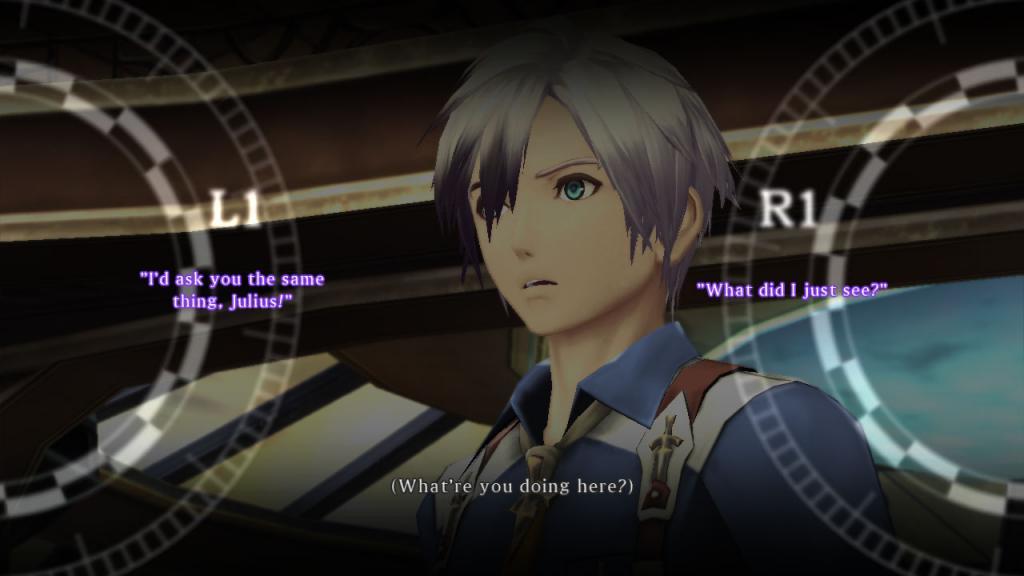
On top of there being a lot more going on, from diplomacy and politics, to spirit and human relations, to brother issues, Tales of Xillia 2 keeps you engaged by giving players the power of choice. Ludger is mostly a silent protagonist (he’ll voice things like “Yeah”, “Oh No” or “Good”) but throughout the entire game the player is making choices on what Ludger should say. While these choices don’t dramatically change the plot, they do change the scenes enough to feel substantial. On more than one occasion, I found myself staring at dialog options for longer than I expected, trying to pick the right line for my Ludger. The system works surprisingly well and made me wonder why we don’t see it more often in JRPGs. However, I must say, Ludger’s silence didn’t go over well with me. I feel like certain scenes play out awkwardly because for some reason, the developers chose to make him nod or grunt, instead of actually holding a conversation with his friends.
Which brings me to the cast, and one of the reasons that Tales of Xillia 2 feels so much like its predecessor. Other than Elle and Ludger, every other member that joins your party is from the original Xillia. These characters all reprise their roles and feel just as familiar as when you left them. I love jumping into a sequel and feeling like these characters have grown older the same way I have. Jude is trying to figure out Spyrite technology, Rowen is now working for Gaius as Prime Minister for Reize Maxia, hoping to calm relations between his country and Elympios. Each character is interesting in their own right and in Xillia 2 you can explore their stories with plenty of side-quests that are specific to each character. While I loved catching up with everyone, it still was a little disappointing not meeting any more new characters. Ludger and Elle just aren’t as interesting or likable as the rest of the cast. Maybe that could’ve been fixed if Ludger talked more.
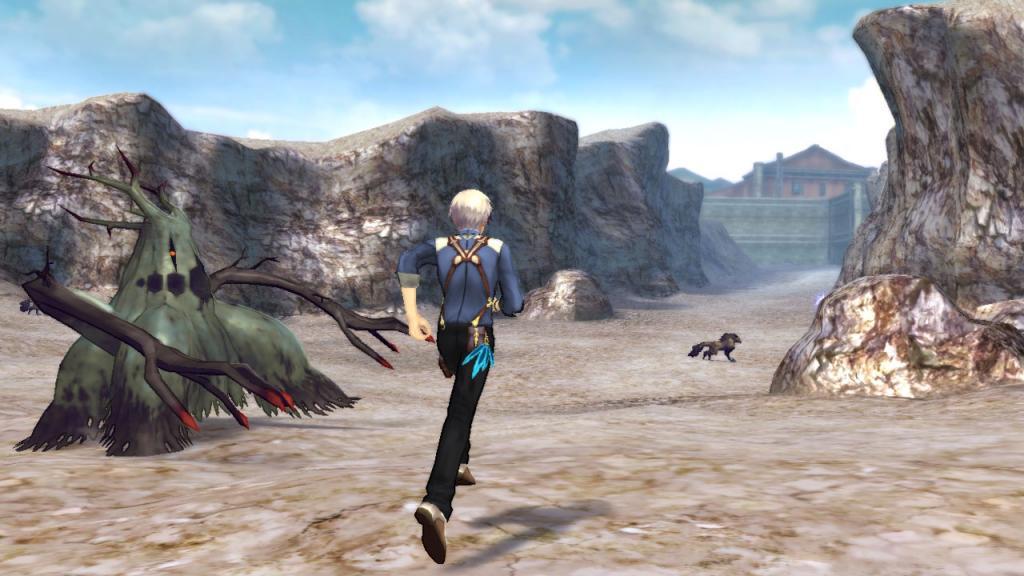
Along with a cast of returning characters, the locations make a return as well. Throughout Xillia 2 you’ll travel all over Rieze Maxia and Elympios, again. Disappointingly, about 80% of the game takes place in areas already present in the original game. They’re not even built differently, but completely re-used. It makes sense considering Xillia 2 takes place in the same world, but it would’ve been nice to see more original content. The environments were never really that interesting to begin with, so adding a little something extra would’ve gone a long way. Even some of the sounds are ripped right from the original. If I have to hear, “Mutton! Fresh Mutton!” one more time…
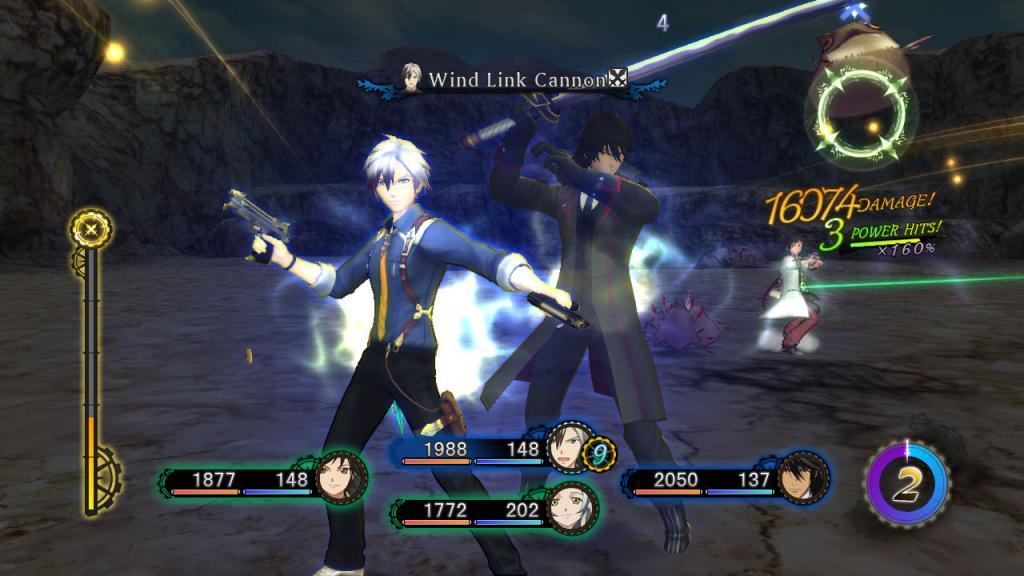
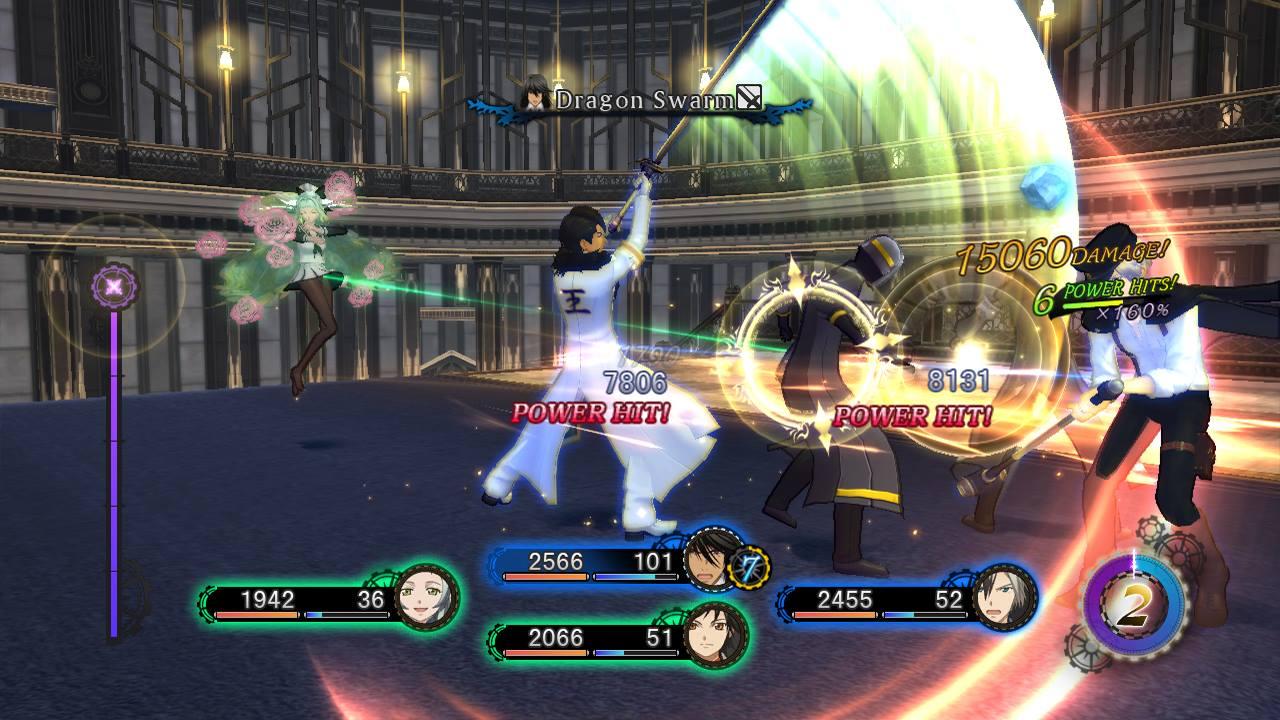
The sequel also retains the battle system I loved so much in Tales of Xillia, with a couple minor additions. The battles in Tales games all follow the same real-time format where players control one character and can move freely on a plane attacking whichever enemy they desire with a mix of basic attacks and special attacks. In Xillia and Xillia 2, you can link up with different members of your party to add additional boosts to your fighting style. Some will allow you to recover Technical Points (points used to cast special actions) faster, others may be able to help break the guard on enemies. On top of the boosts, linking also allows you to perform devastating team attacks that not only deal tons of damage, but look really cool too. Xillia 2 slightly improves upon this system by giving Ludger the power of the Chromatus, which transforms him into a dark, invincible being for a short time, complete with his own moveset. Keeping the battle system so familiar but including this very empowering addition is fantastic. Ludger is also given multiple weapon types to use, giving a sort of rock-paper-scissors approach to combat. Certain enemies will be vulnerable to guns, others will be vulnerable to blades, and you have to figure out what’s what. When you spend so much time in the game fighting, you don’t want to have to dread each encounter and for my entire playthrough I never got tired of the battles in Xillia 2.
By defeating more and more enemies, you’ll level up, raising your party’s stats, but in order to gain access to new skills, Xillia 2 replaces the Lillium Orb system with the Allium Orb. Sometimes games get really deep and mechanical with everything you need to do in order to play properly. Not Tales of Xillia 2. Here, the Allium Orb is incredibly simple to use. You simply pick an extractor and all the ore you find from battle will automatically unlock the skills in that extractor. It’s so simple it’s…kind of boring. Using the Allium Orb takes away some of the customization I love so much about RPGs. You don’t feel like you have as much control. But in the end, you still can get the skills you need, and it’s not hard to do, so it works. I can’t really argue with results.
The battles in Tales of Xillia 2 will take you all over the lands of Rieze Maxia and Elympios. The story will take you from the highest, snowiest peaks, to the deepest, darkest caves, and beyond. Exploring new areas (even if you’ve seen them in the first game) and uncovering new details about the plot are my favorite things about big RPGs like this. The worst thing you could do is put a roadblock in front of that and that’s my biggest problem with Tales of Xillia 2. In the game, Ludger ends up in debt through some pretty shady means and he’s left to pay off this debt throughout most of the game. After every story-based chapter, you’ll then need to pay off a specific amount of debt before you can access the next mission. The price you have to pay will keep going higher and higher the further you get in the game, blocking you off from continuing the story. You can make money by taking on jobs posted in each town. These range from killing specific monsters to finding certain items and turning them in. It’s a system put in place to pad out the game and make it feel longer than it is. I don’t need that kind of padding. Sometimes I liked to turn on the game and just mess around with side quests, but when I felt like plowing through some of the story I was constantly delayed by having to pay back this debt. There are rewards for paying back more than the asked amount, which is nice, but I don’t think it should have been as big of a nuisance as it is. It certainly hurt pacing of the game for me.
At least while being forced to get a job, I was able to listen to the great music of Tales of Xillia. Again, a lot of tracks have been reused for the sequel but the soundtrack is just so pleasant that I can’t complain. Towns have lighthearted, upbeat, tunes while battles are backed by heavy, fast-paced rock songs. Every new location seems to come with its own song that captures the spirit of the landscape. And while a lot of songs are reused, the tracks made specifically for Xillia 2 are just as good. This is one of those games that make me want to go import its soundtrack.
It’s hard for me to really judge Tales of Xillia 2 without directly comparing it to its predecessor. But when so many aspects are pulled directly from it, how can you not? In some ways, it looks lazy to put out a sequel with so many reused pieces but in the end, most of it works. While playing Tales of Xillia 2, I felt exactly how the game should make me feel, I was seeing the world of Rieze Maxia and Elympios one year later. I was reconnecting with those characters one year later. Not everything is going to be fresh and new. And that’s okay. Even though so much of the game follows the footsteps of the original, it does falter. Making players have to pay off more and more debt in order to access the main story is just needless padding that did nothing but frustrate me. The story itself is just too convoluted and the main characters are nowhere near as endearing as the supporting cast, who make the trek worth it. Plus, with one of the best battle systems out there, Tales of Xillia 2 is still a good game JRPG fans should check out.