



Nuclear Dawn Review
Posted by
FiverBeyond
on
Genre-mixing has always been a wellspring of creativity in the video game industry. We’ve seen splashes made by notable hybrids like the “puzzle platformer” or the ”RPG shooter”. The success of titles like Bioshock and Borderlands have boosted the adoption of RPG mechanics into such a wide range of gameplay types that the actual ‘role playing’ element is often only there to advertise the genre mix.
Nuclear Dawn takes on a mix that has been particularly difficult for developers to realize: the FPS/RTS hybrid. There’s an obvious reason why these two genres might clash: troops are not units. When playing a real-time strategy game, your soldiers are quite happy to sacrifice their lives doing exactly what you order. Players don’t do that. Players also won’t wait patiently while you save up the resources to ‘buy’ them onto the field. Then, of course, there are issues like perspective, gameplay balance, micro vs macro, all of which need to be addressed in both game forms. In other words, blending RTS with FPS carries a massive amount of baggage that must be dealt with, and to their credit, Interwave studios has done so.
Well… mostly.
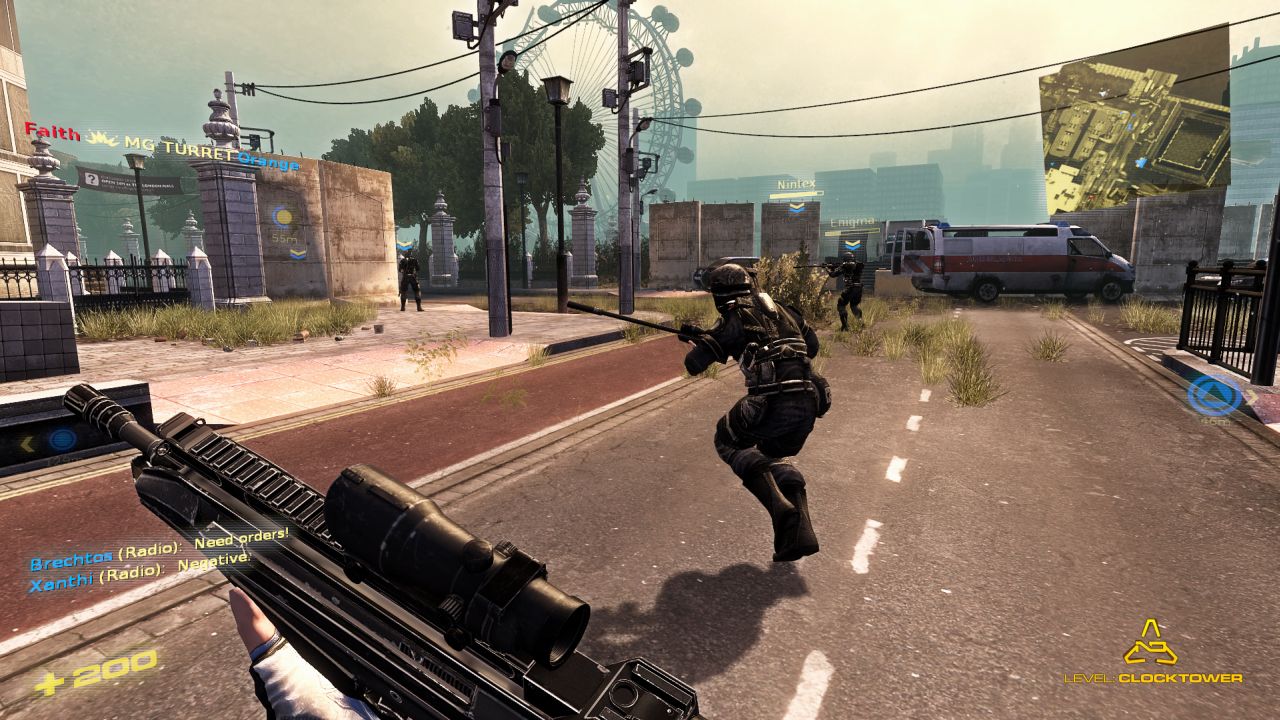
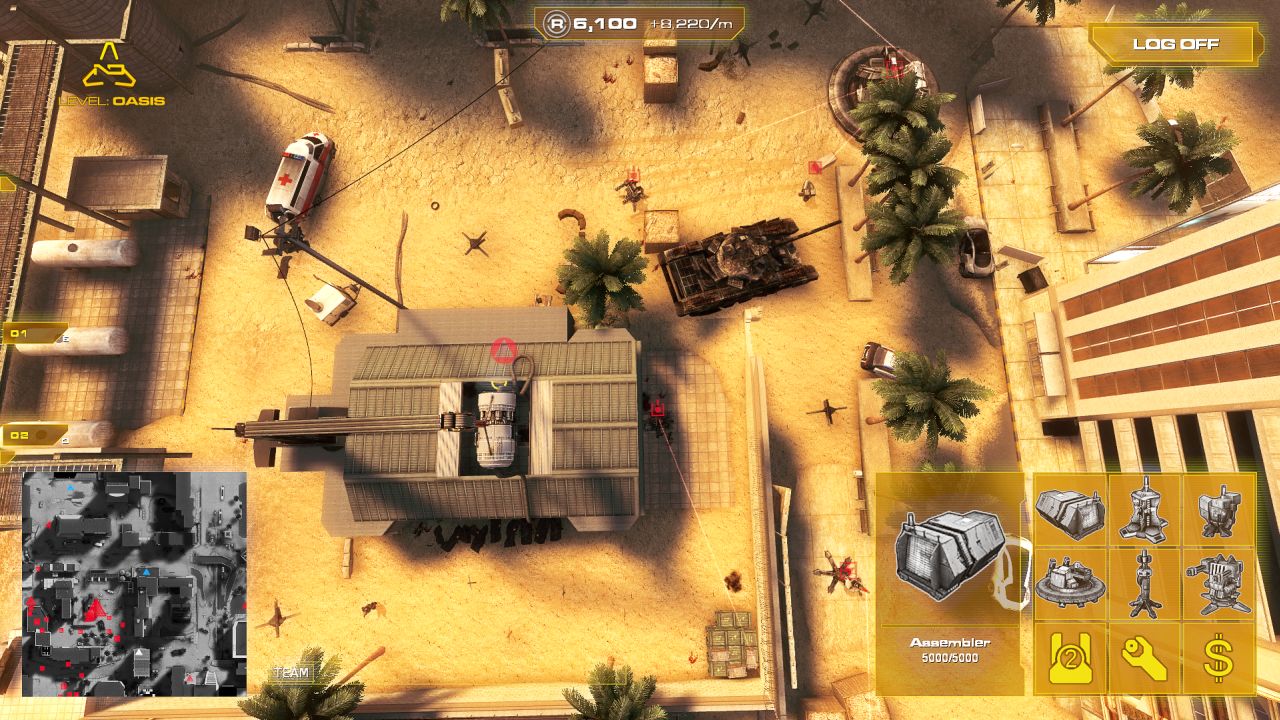
Gameplay in Nuclear Dawn centers around gaining control of resource points scattered throughout maps, with most players acting as first-person soldiers, and one team ‘Commander’ who directs the action from a birds-eye view. The more resource points your team controls, the more support structures and research your Commander can finance. Structures include useful buildings like forward spawn points, turret guns, and health stations, while research can improve your weapon options. It’s a fun and effective system because it guarantees that players and commanders rely on each other. During every game you’ll hear troops calling out for siege weapons or forward spawns, while the commander asks for certain resource points to be captured. This game requires constant communication and cooperation between teams, more than most other team-based games I’ve played, and a natural downside is that when your team loses, it’s easy for both players and commander to walk away thinking that it was the other person’s fault.
The bulk of the effort put into making Nuclear Dawn seems to have been on the FPS experience, and this was a wise decision. Players choose from one of four classes: the powerful Assault, the armored Exo, the quick Stealth, or the handy Support class. Weapons are varied and feel satisfying to use. Special abilities like cloaking, aiming down ironsights, or spinning up your minigun are smooth and work well in gameplay. Despite its age, the Source engine still provides a responsive gaming experience that lends itself very well to action, and the maps that come with the game, though few in number, give a strong variety of locales and environments.
On the flip side, the RTS or ‘Commander’ experience is much weaker, with visibility and navigation difficulties, as well as troublesome controls. There are communication issues that feel like they need to be hammered out: for example, soldiers on the battlefield have the option to call out for supplies or buildings, but there’s no system in place for marking where these calls come from. If, as a soldier, you desperately need a supply station to help you out, you’ll need to spend some time chatting with the commander to guide him to the spot on the map where you’re standing. It doesn’t help that map locations aren’t codified at all: in nearly every game, you’ll need to ask “My right, or your right?” or perhaps “Which base is ‘north’?”. Since there’s essentially no micro involved in the RTS experience, these downsides don’t necessarily ruin the game, but they do mark it as, shall we say, unfinished.
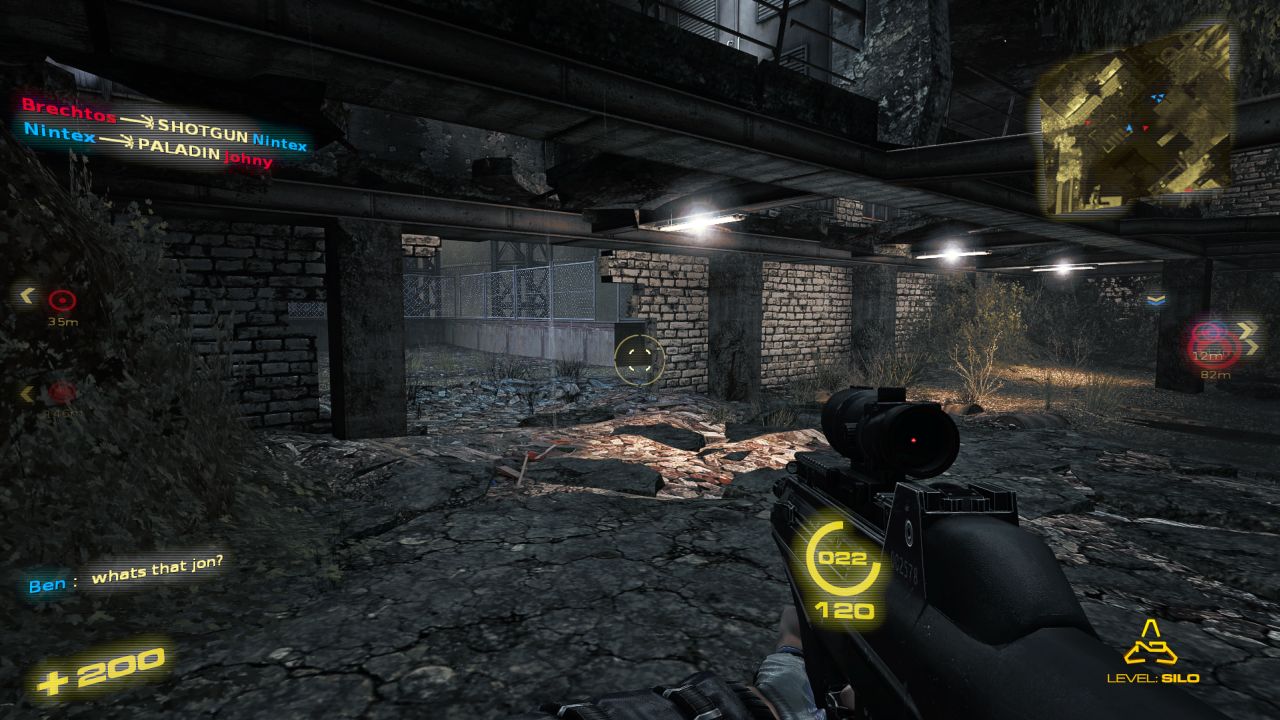
There are a host of logistic issues involved with hybridizing the shooter and commander genres, and most of these have been addressed to one degree or another in Nuclear Dawn. For example, teammates have an opportunity to vote their commander out of office if they feel like he’s not doing a good job. The commander has the option to organize his team into squads, but I’ve never seen this feature used (remember: troops are not units!). The point system rewards players for following orders from the commander, and likewise lets the commander earn points whenever he assists his team.
One problem with the gameplay that I found is in the way matches tend to play out. Most maps are fairly symmetric, with matching resource points on each side, and one extra-productive resource point in the center. So much of the game hinges on this primary resource point, that all too often the game can be decided in the first few minutes of a round. If one team survives the first firefight at the primary point, they stand a good chance of holding that point for the rest of the game, guaranteeing a win. Even with this repetition, however, the fights tend to be enjoyable, especially since there is an experience incentive for the losing team to hold out if they think they can last to the end of the round, or to surrender if they want to cut their losses.
But even if the matches themselves can be fun, the real problem with this game is the number of barriers to entry. Tutorials are limited to only four short videos, which give the briefest of explanations to each class and to basic Commander elements. I had to play through several frustrating matches just to figure out which buildings would heal me and which buildings would kill me (and trust me, this is not a fun way to play). This is bad enough for the beginning FPS footman, but absolutely disastrous for the role of commander. With no hands-on tutorial for commanders, the only way to pick up on how to play the position is by throwing yourself untrained into a few matches and reading through the tips step by step while your team gets slaughtered for half an hour. I had to watch a few Youtube videos from good samaritans to get my bearings, and even then I was desperately in need of direction as I played. If friendly strangers on the internet can spend one evening and make a better tutorial than what comes with the game, a red flag should be waving somewhere in the development line. As with most other missing aspects of the game, instructions for commander play can be found online, but this doesn’t really address the problem: the only way for beginners to learn how to play commander is to ruin the day for the rest of their team.
Aside from these more serious flaws, there are some aesthetic touches that are sorely missed in the game, like a sense of world building. It may seem shallow to fault a multiplayer game for lacking story or setting, but there are too many good examples on the market now to justify this omission. As far as I can tell, the only source of story for ‘Nuclear Dawn’ is two written pages on the game’s website. The game itself has ample opportunities to build a flavorful world (maps include billboards, marquees, graffiti, etc), but it doesn’t take much advantage of them. I wouldn’t make a point of this problem, if it weren’t for the fact that the game’s website proudly splashes the question across its opening page “Which side will you join?”, seeming to emphasize the difference between the two in-game factions… a difference which isn’t played up at all in the aesthetic details of the actual game.
Rumor has it that Nuclear Dawn is in a quasi-beta stage, released in hopes that subsequent patching and modding, with a good ‘Free-to-play’ weekend or two, will encourage the fledgling community to grow. I’m all for this, as the hybrid FPS scene is far from saturated right now, and Interwave studios seems to be a very community-minded, gamer-centric startup. However, as it is right now the game is so rough around the edges it could be digital sandpaper, and being overpriced and difficult to learn isn’t helping. Give it a try if you’re interested in the hybrid gameplay. Otherwise, my advice is to wait it out for a few months and see if this tree bears any fruit.