L.A. Noire Review
A detective thriller set in a classy era, this title offers a unique and enjoyable experience that outweighs its shortcomings
L.A. Noire is a different kind of game. Not just because it was published by Rockstar Games, who are well known for their open world action titles, but rather due to the game’s unique nature of both presentation and gameplay mechanics. Set in a fully realized city of Los Angeles in 1947, L.A. Noire presents a very detailed world to explore, not unlike other Rockstar titles, but things are different. Taking on the role of a police officer Cole Phelps, players will rise through the ranks of LAPD, mainly spending their time investigating crimes around the city. This involves interrogating suspects, which the game uses to its full potential thanks to amazing new facial animation technology. Though all of the above sounds extremely promising, the game does often fail to reach its full potential, based on the grand and imaginative ideas it is based on. Still, this is a title that offers something unique in an industry that’s often in dire need of originality, and is recommended to fans of adventure games.
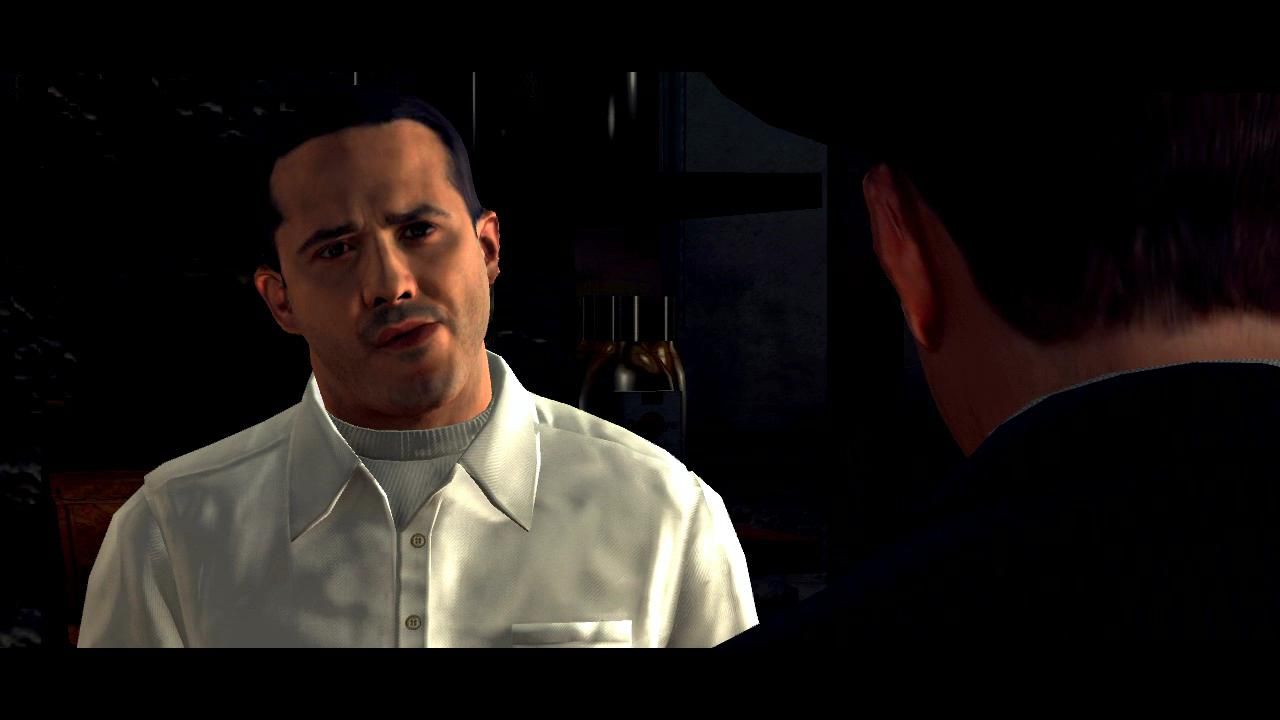
The game takes place in 1947 Los Angeles, a post-war era often associated with glamor and fame, but also drug abuse and high crime rate. Players assume the role of Cole Phelps, an LAPD officer who recently returned from duty at WWII. As the game’s story progresses, we get to learn more about the events during the war, and how they are connected to current crimes in the city. Cole will get to work with a variety of partners, who are all well-acted and provide great dialogue, as well as many minor characters during the case investigations.
Likely the weakest persona in the whole game is Cole himself, who isn’t offered any background story at the game’s start. As the plot advances, we learn little more about Cole that wasn’t already apparent from his behavior and interaction with others. Avoiding spoilers, there is a major plot event midway through the game that puts Cole in a very difficult situation, but it’s hard to care for a character who we barely know. The game is unable to exert the drama of the situation on the player, because up until that point Cole’s personal history has given us little information, so his actions during the pivotal event don’t appear as shocking as they were likely intended to be. Thankfully, the game does wrap up Cole’s story in a satisfying manner, enough to forgive the big mis-step earlier in the plot.
Unfortunately the same can’t be said of other plot threads. As players progress through the ranks of LAPD thanks to good case work, a bigger mystery begins to unravel. While the initial cases start off as tutorials of sorts, there are very few things to do other then let the game guide you to the conclusion. These cases are also fairly short and often forgettable, and almost outlast their welcome. By the time players get to the homicide desk, the cases reduce in number but thankfully increase in complexity and length. It’s also where players get a feel for a bigger story arc, where cases begin to get connected towards a larger conclusion.
As exciting as that may sound, it’s difficult to remember, looking back, any single satisfying case closure. As the first batch of cases in the game is very simplistic, there is not much pleasure in finally catching the bad guy. Indeed – in most cases the resolution is provided to the player on a silver platter, with not much thinking required. Be that a conveniently found piece of evidence, or an attempted escape by the suspect, solidifying their guilt. You don’t feel as though you actually made a difference on the case, other than collected all the clues for the DA and waited for the suspect to do something stupid.
In the second half of the game, then, cases do become better. Their resolution, however, does not. In a change of pace, the case outcomes don’t feel satisfying because you know they aren’t final, as a much bigger plot element is developing. Don’t misinterpret this – the end results of the bigger plots are memorable and satisfying, but it again comes at the expense of individual cases. Even at the end of it all, there is nothing said of what has occurred or what will happen next, leaving the main plot in a rather anti-climatic manner.
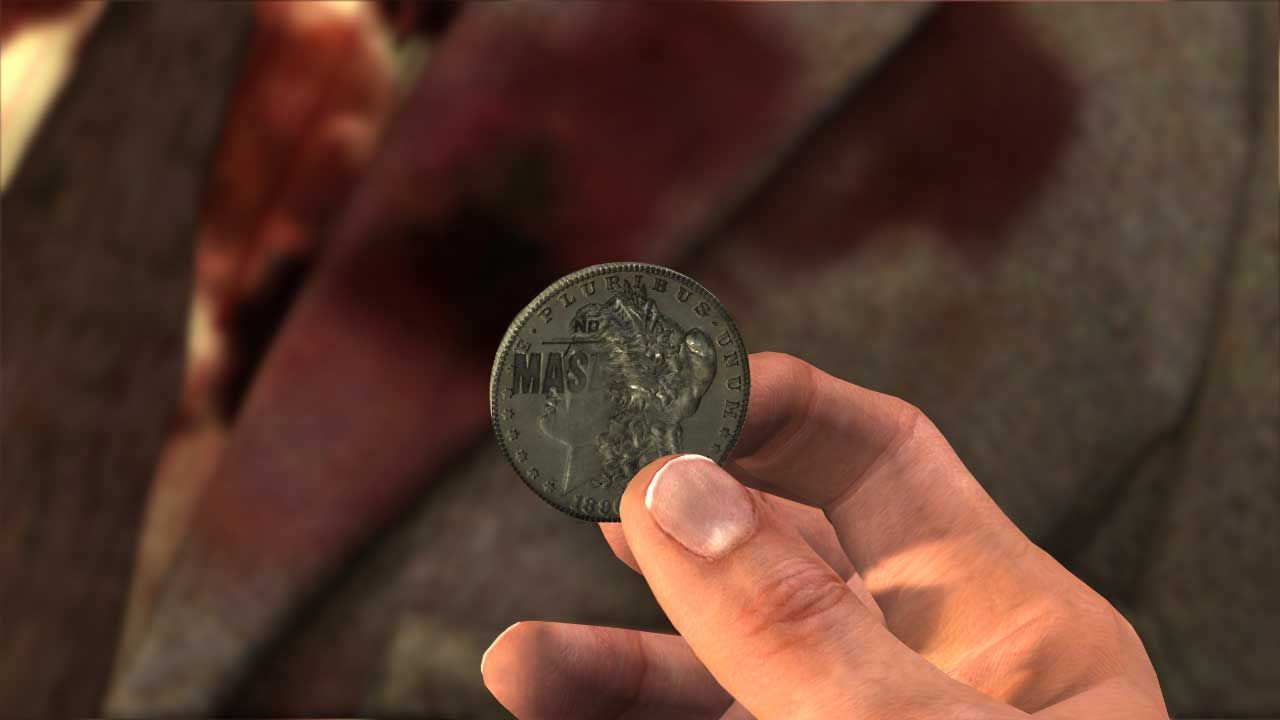
As a detective in L.A. Noire, the main pillar of gameplay is investigating one of the 21 cases in the story. After getting the call, players visit the crime scene and begin their search for clues. When Cole approaches an object of interest, a sound plays and controller vibrates, prompting the player to investigate the item. Both these notification features can be turned off, but doing so could leave you walking around for a long time, trying to find an item that can be interacted with in the game’s often cluttered crime scenes. Once found, some items are actually irrelevant and Cole will be quick to point that out. Those which are actual clues can be further inspected, by rotating them in real time using the analog stick. This is a neat and unique mechanic that works without a hitch, and adds a level of mystery to every trinket you come across.
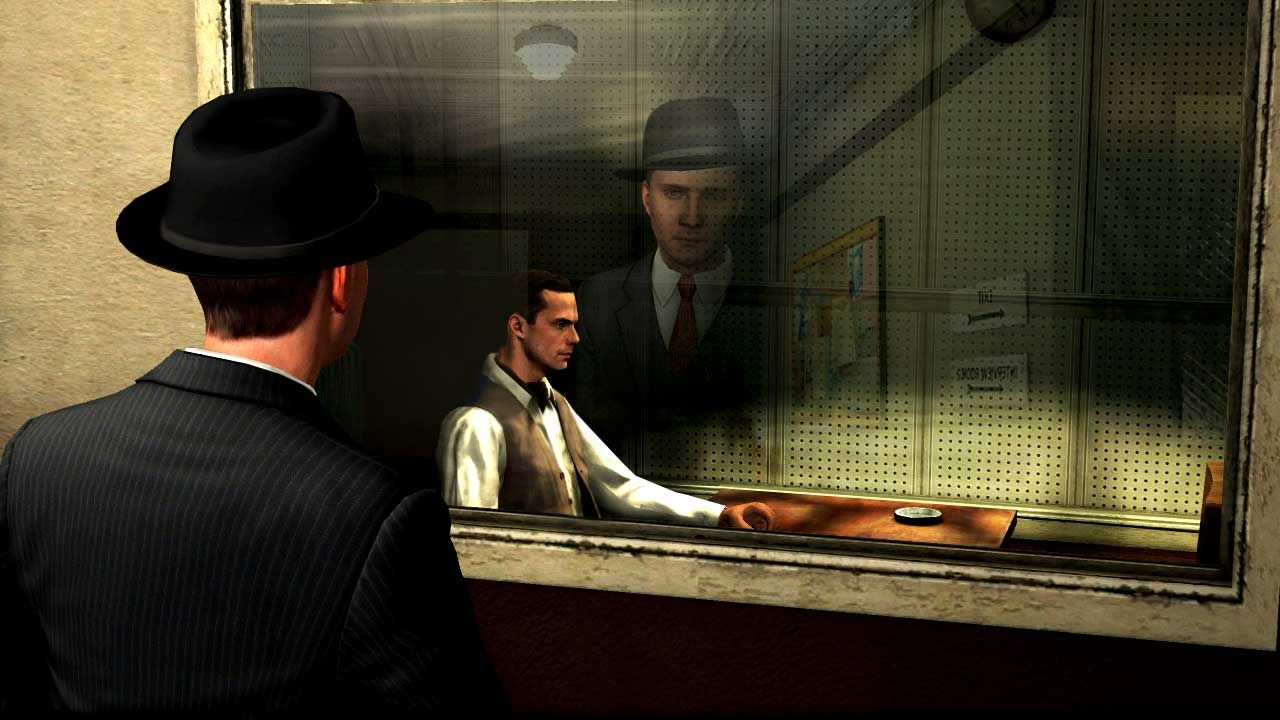
Once enough clues are discovered, Cole will likely have noted some places in the city to begin his investigation. This involves interviewing people thought to be relevant to the case, and getting to the truth. The interrogations of suspects are by far the biggest draw of the game, not only because of the unique mechanics involved, but also thanks to some amazing facial animation technology. When talking with suspects, Cole can ask a series of questions related to the case and evidence that was found, and then interpret the response. Given three options, players can accept the answer as truth, doubt it, or just accuse the person of lying. When accusing someone, players need to present a piece of evidence to back up their claim, while the other two options are purely verbal. This is a unique gameplay mechanic not seen even in leaders of the adventure genre, and it feels right at home in L.A. Noire.
Backing up the interrogation gameplay is the new animation technology, seen for the first time in the industry. Developed by Team Bondi with help from Rockstar Games, this tech is an amazing step forward for facial animation in gaming. Not only does it look incredibly realistic, it plays a pivotal role in the gameplay, as players must evaluate the person’s intentions based on their look. If a suspect is very calm and focused in his response, he is likely telling the truth. However, should his eyes start to wander and a smirk appears, he may as well be hiding something. As a technology - the animations are unmatched, but in gameplay, there are a few small quirks. Since the players have little to go on during interrogation except for the facial expressions, many actors over-played their roles in order to give players a greater hint that they aren’t being honest. It’s difficult to imagine those who are guilty in real life investigations would give away their intentions with such vastly noticeable glances around the room and biting their lip. But, for the sake of the game, it works.
A virtual rank system is present in the game, allowing players to gain levels and subsequently unlock hidden car locations and new suits for Cole. Perhaps more importantly, each rank gained allows players to get another Intuition point. These points act as aids during the investigation – spending a point at a crime scene allows Cole to highlight all the clues available. During interrogation, a point can be spent to eliminate a wrong claim out of the three (truth, doubt, and lie). Or, as a fun idea, allows the player to check the percentage of global players from Rockstar Social Club that selected each possible claim.
There are noticeable limits to the interrogations though. Players can only ask questions pre-determined by the game, which often leaves gaps in the case because the game didn’t feel it necessary to let the player ask the right questions. There is no way to bring up questions about specific clues either. For example, having found a murder weapon at the crime scene to be registered to the suspect, players are unable to ask the suspect directly to explain how their gun was used in a murder. Instead, the case must be solved by making the suspect confess of his strong religious beliefs as the motive for a crime. These kinds of limitations often hinder the immersion of detective work in the game, going against the logical questions that many players would have preferred to ask instead.
As mentioned earlier, there is a general feeling of lack of control over the game’s outcome. There are a few occasions where players actually get a choice of who to put in jail, but these choices are revealed to be meaningless, as even Cole himself suspects that something isn’t right. Even if Cole finds almost no clues and fails all interviews, the game throws in plot elements that resolve themselves in order to keep the game going. It matters little how well or poorly Cole conducts his research and interrogations, the end result is the same, it simply takes longer to get there. This is somewhat disappointing, as it could have been great to get a chance to actually fail cases and put away the wrong people, to cause long-term repercussions.
Outside of the game’s main cases, players are free to roam around the city. Unlike titles such as Grand Theft Auto or Red Dead Redemption though, there isn’t a whole lot to do. The main attraction would probably be the 40 available dispatch calls, which occur during random hours of the day. These small missions usually include a quick cutscene explaining the situation, and then a chase or shootout with the suspects. These missions are very quick to complete, lasting no more than a few minutes – it often takes longer to drive to them, than actually complete. There are also film canisters to find, hidden vehicles, and landmarks to discover, but these are purely arbitrary treasure hunts that have little gameplay incentive (except for the cars of course).
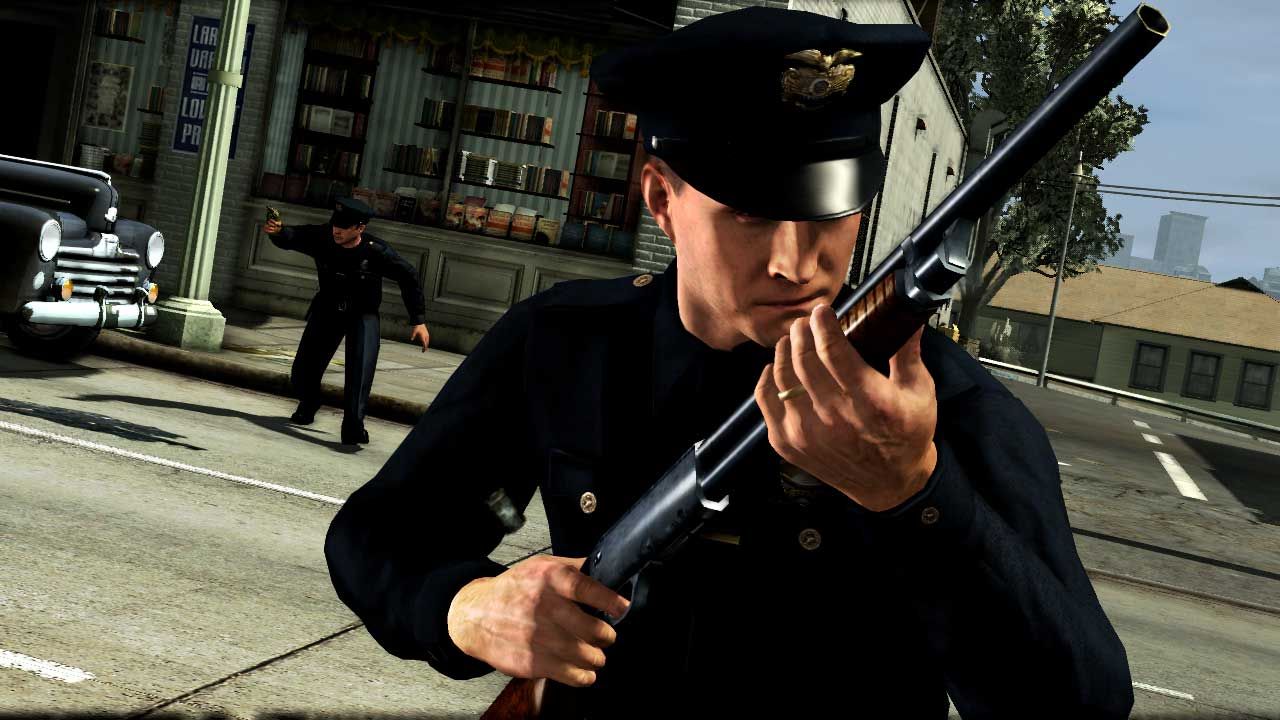
There are some realism issues, or rather poor game design choices, in the game. For example, the mechanic is introduced early on that allows Cole to fire a warning shot with his weapon in order to halt a fleeting suspect. For some reason, the use of this mechanic is extremely limited by the game, down to a handful of foot pursuits. Chases in general feel scripted, as Cole is often unable to catch up to his target, even if the suspect is an old, out of shape man. In addition, a lot of the chases end with a hostage situation, where Cole has no choice to wound or otherwise incapacitate the subjects. The only option during hostage taking or shootouts is to kill, resulting in a very high body count in the game. Even aiming for the leg or arm, the suspects always ends up dead, thus limiting the outcome in a lot of situations. Finally, likely the biggest realism issue for most players will be the fact that interrogation questions can indeed be failed. If the player doubts when the truth or lie are being told, they fail to get the correct response from the suspect thus potentially missing out on a story thread. Not only that, a big x mark appears next to the question, letting you know that you didn’t respond appropriately.
All of this roaming takes place in the beautifully recreated city of Los Angeles from the 1940s. The developers did an outstanding job of actually recreating the city, based on aerial photos from the time period. Not only that, the game has many notable and accurate landmarks, such as the Hollywoodland sign on the hills, Pershing Square, and many others. The player is free to explore the whole city, which is dauntingly large, during the course of the game. Most of the locations aren’t interactive though, as player is only allowed to enter buildings during specific cases. The vehicles and lifestyle of the era are also well represented, making it for a satisfying trip back in time. Given the sheer scope of the city, and the lack of things to do mentioned in previous paragraph, it does at times feel fairly empty uninvolving. The drives between destinations get very lengthy at times, but thankfully the fast travel option is available. The setting for L.A. Noire is historically accurate and fantastically recreated, but from the sheer fun and gameplay perspective, there’s just not a whole lot on offer.
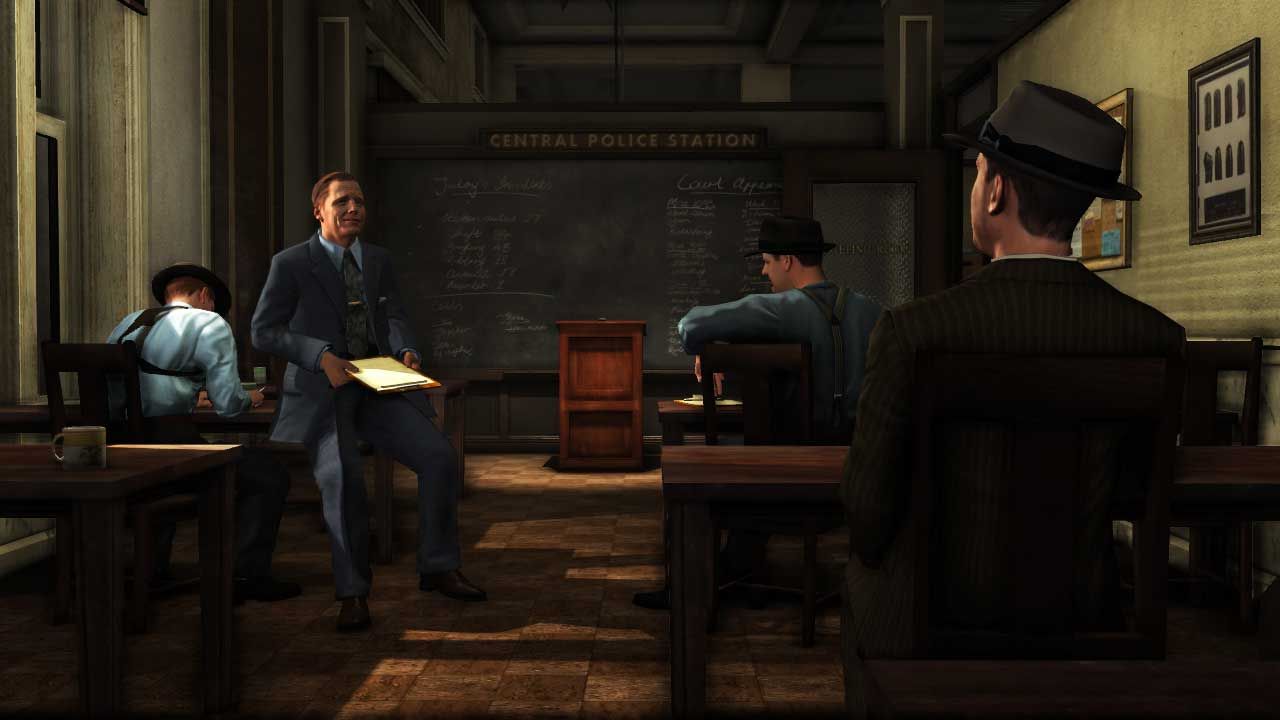
The game's presentation is full of style. From the sharp suits to the classic cars, and of course the city itself, L.A. Noire does a great job of setting the mood. Fans of noir will have a lot of enjoyment from this setting and will love the time spent in this immersive world. To complete the package, the game even includes an option to play in black and white. The game uses its own engine, which is very similar to Rockstar’s Euphoria. This means the framerate is steady, physics are solid and bugs are minimal. Unfortunately, it also means the game’s visuals are often sub-par, with many jagged lines and a lot of texture streaming. It even undermines the fantastic animation somewhat, as the faces of characters are in fairly low resolution.
The sound design, on the other hand, is great through and through. From the characters delivering their lines, to the ambient soundtrack, to the sounds of the radio, it’s all a joy to hear. Actors deliver their dialogue with passion and care, which is supplemented by good writing. Audio design is good as well, providing authentic themes to the world during exploration. Finally, the radio station is also great and very fun to listen to. There is but one quirk, as the radio is replaced by looping theme music when traveling to a map-marked destination. That means for almost all of the story driving (when not in free roam), listening to the radio isn’t possible, which is a very unfortunate design decision.
L.A. Noire is something different, not just for Rockstar, but for the genre as a whole. There has never been quite a game like this, with an interesting setting and unique gameplay that falls outside of the mass market. There’s no doubt that with its amazing animation tech, a good story and well developed investigation mechanics, L.A. Noire will find and surprise its audience. Perhaps this review sounded a bit negative at times, but worry not – this is a good title, with great ideas that fall just short in execution. If there is a sequel, and we would hope there is, the game has done enough things right that it would only need to polish a few of its features, not reinvent them. This is a unique experience, though not without fault, that’s recommended to anyone curious in the adventure genre, wanting new gameplay experiences, or just to check out the amazing animation technology.
Share:









 Comments
|
||||||||||||||||||||||||||||||
 Jun 5, 2011 10:20:46 (Jun 5, 2011 10:20)