Tropico 3 Review
Become El Presidente and build your tropical paradise in this fun city builder sim
The original Tropico was a clever and different city-building game with enough unique style to help separate it from other RTS games in the genre. Tropico 2 arrived later, which was not received as well by the critics and fans due to core gameplay changes that simply did not work. And so was revealed Tropico 3, a spiritual “re-invention” of the original classic which promised nothing more but to bring the classic game to the modern audience with a few adjustments, and without altering the original formula too much. To this end, Tropico 3 delivers on its promises - the gameplay is instantly familiar to the fans of the original, and the new 3D world with great graphics and a re-energized soundtrack helps further promote this sequel. This time around, developed by Haemimont Games and Kalypso Media, the title pulls off interesting city building mixed with stellar and enjoyable presentations. The formula of the original was shifted a little to ensure good replayability was added and any core gameplay annoyances fixed, to the pleasure of the fans. However, this also means that the game continues to be a bit too complex for some fans, of which more is described later.
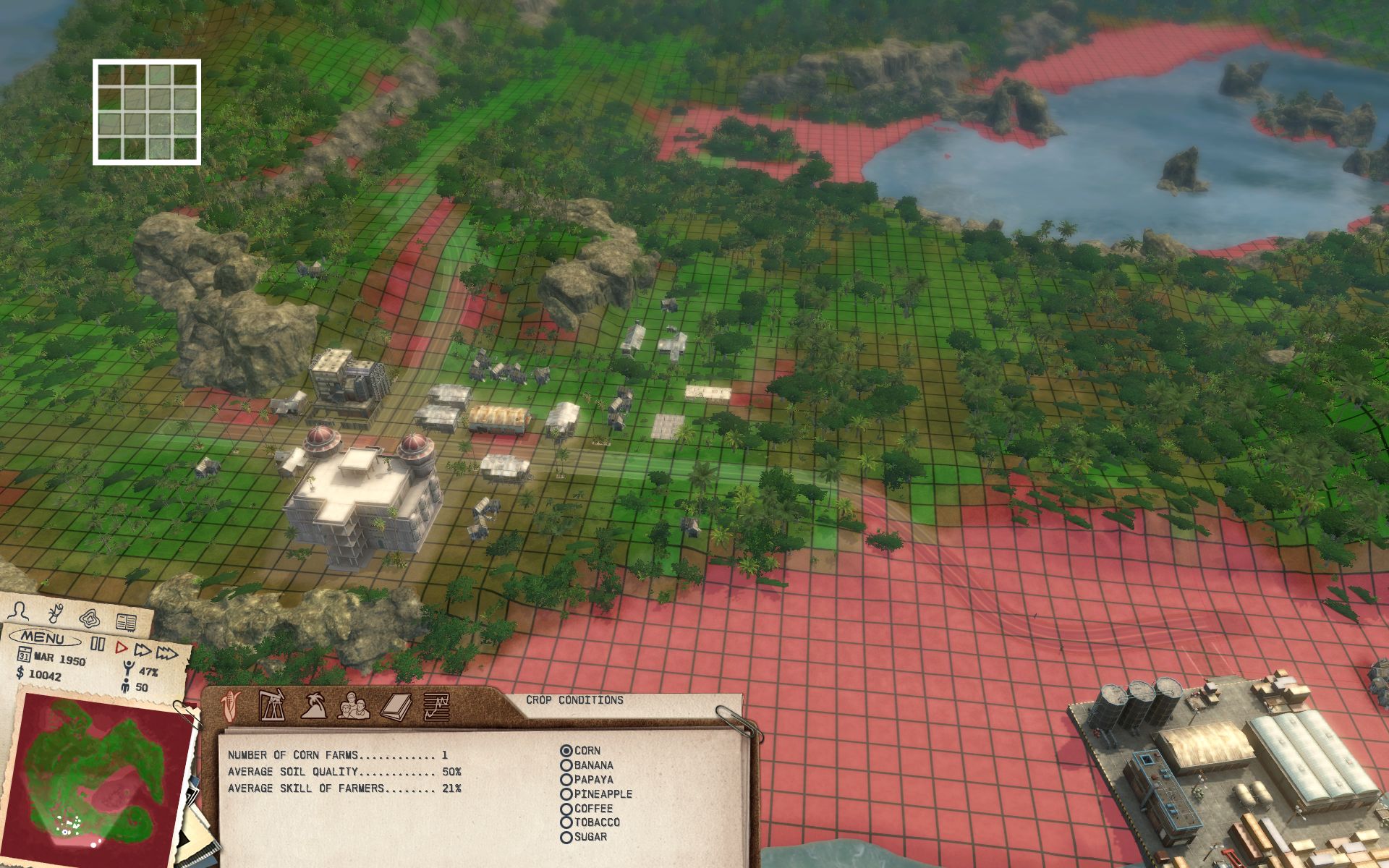
Tropico 3 comes with a 15 mission single player campaign, in which you are faced with 15 different islands as you attempt to bring them to economic and social glory while remaining in power and achieving various mission-specific goals. The missions need to be completed in a pre-set order, as the difficulty of the objectives scales with each new island you unlock to play with. There is enough gameplay in the single player campaign to keep you busy for quite a few days, if not more depending on what difficulty you chose to play on. The game also has a Challenge mode, where you are free to set some starting conditions (to adjust the difficulty) and you must once again complete certain goals in order to win. These challenges are similar to the campaign missions, though they provide some flexibility in how you wish to undertake the objectives. The Challenges are also mod-friendly, and are designed for the community use, so chances are good that soon there will be plenty of fun and difficult challenges made by other users to be downloaded. Lastly, the game also comes with a full sandbox mode where you are free to setup the game exactly as you would like it with no final goals.
Much like the original game, Tropico 3 does a lot of things to separate itself from other city building games, such as Cities XL and SimCity series. For starters, you get a choice to create your El Presidente avatar which you will keep for the rest of the mission. This process was also found in the original, however this time around you get to customize yourself with various clothes and accessories for hilarious or intimidating results. Just remember though, that your appearance makes no impact on gameplay – instead, you must set character settings for your avatar: how you got into office, your strengths and your weaknesses. These characteristics will bring different positive and negative adjustments to how your game will play out – for example, selecting to be an Heir to the throne will increase your popularity with the military but will likely offend the educated population. Choosing to be a womanizer as one of your negative trends will cost you points with the whole female population. There are tens of various traits for all three of the options you must select, and they provide for interesting scenarios and replayability. Once you’ve created your leader, he will become the sole person you can directly control on the whole island. You can move yourself around town to inspire or scare people, give speeches, or simply oversee construction of a new building to make it go faster. The people of Tropico will remain loyal to you as long as they are fed and happy, even if you cancelled all elections for the past 20 years and killed your opposition members.
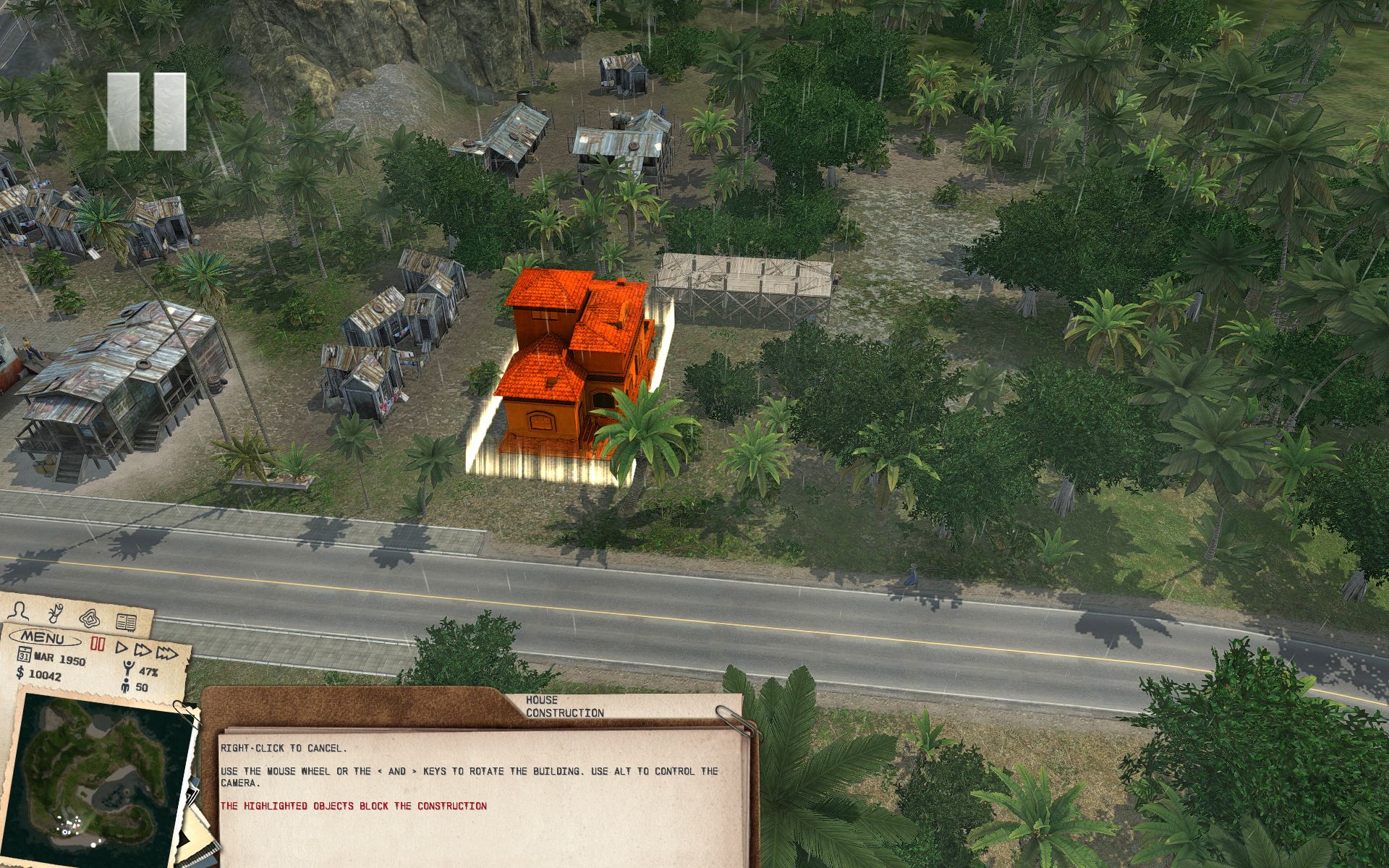
Tropico 3 is a city builder game with a tropical twist (what a metaphor, I’m a genius). You have the usual menu layout with various buildings categorized by function. You have the farms, mines, apartment buildings, restaurants, hotels, resorts, roads, and tons more. City building fans will have a lot to see and do here, as the possibilities of creating your dream paradise island are endless. To keep your population happy, they need to be fed, living in good condition and making good amounts of money. To that end, it’s your job to try and reach these perfect conditions for the majority of the citizens. You start off with a construction yard where workers are based, and if you go and set a farm to be built elsewhere, you can watch the workers get in their trucks and drive to the location, get out, and start hammering away. You can’t actually control individual characters, so to this end the game may seem slow as workers sometimes take a bit of time to get to their work site and start work. But remember to move your Presidente over there if you want construction to finish sooner. The economic game in Tropico 3 runs very deep and it will definitely take most people a few missions to get fully acquainted with the system. There are many resource types to juggle, imports and exports to send to USA or USSR (all while waiting for the freight ships to arrive at random intervals).
Another big part of the game is the political game. You are an island that starts off with mostly neutral relations to the only other two nations in the game, USSR and USA. From here, it is up to you if you wish to remain neutral or start forming good relations with either of these nations. It’s impossible to be allied to both at the same time, so make your choices accordingly. Depending on who you choose, it will bring various positives and negatives to all aspects of your island. For example, allying with USA will be a major boost to your tourism industry, but it will also unsettle your military when the US decides to build a base on your island. Similar positives and negatives will occur if you choose to ally with USSR. If you decide to stay independent, there will still be small incentives here and there, such as private firm in the US offering you a contract on your cacao exports. You are also in full control of how your island is run politically. There are tons of different acts or laws you can issue, each with a specific effect on either your population, or your economy, or both. These contribute to the flow of the game in the same way your avatar’s character traits do that you’ve chosen at the beginning. Some acts are permanent (until you choose to cancel them – such as a curfew) while others are event-based and will end after a short period of time. Unlike other modifiers in the game, the acts you issue do not always have a balancing negative effect, however those acts often require specific objects to be built or simply cost a lot of money to implement. A fun twist on the political game also comes with the ability to set even the smallest things such as what TV stations are broadcasting and newspapers are printing – so you could force a ton of propaganda on your people regarding your honest ways while you eliminate party opposition during the night.
The part of Tropico 3 that separates it from other games in the genre is definitely its complexity. Unlike other games, where you really do not have a choice of selecting any individual person because they are merely random spawns, in Tropico you are able to select any individual and literally follow their daily routine, which is extremely realistic and detailed. You can see where the person works (watch them go to work), see them work, eat, go home to rest and repeat it all again in the morning. You can watch them get married, have kids and change careers, and even emigrate if things on the island aren’t going too well. They also grow, age and eventually pass away because of old age. It’s an extremely well presented level of detail that is very fun to follow. Another example of the game’s complexity is the ability to adjust many different functions for most of your buildings. For instance, you could set your workshop to work the employees for very lengthy days with no weekends, which will get things done faster but will probably not make them happy. The alternative is to let them work less but live a happier life. For most of the buildings you can also adjust the wages of all employees based on if they are educated or not, and you can also pay to bring educated immigrants on the next freight ship who will immediately go to work at their new place of employ and add to your population totals. New to the series with this third game are random events. There continue the “tongue-in-cheek” humor of the island setting and range from devastating tornadoes to volcano eruptions to military revolts. This once again further adds to the game’s high replayability and chances for all kinds of fun situations. The complexity of the game is also not helped by the lack of a proper tutorial – the one included with the game is simply not good enough to cover even some of the major political and building aspects. So if you enjoy discovering things on your own, you will have your hands full here.
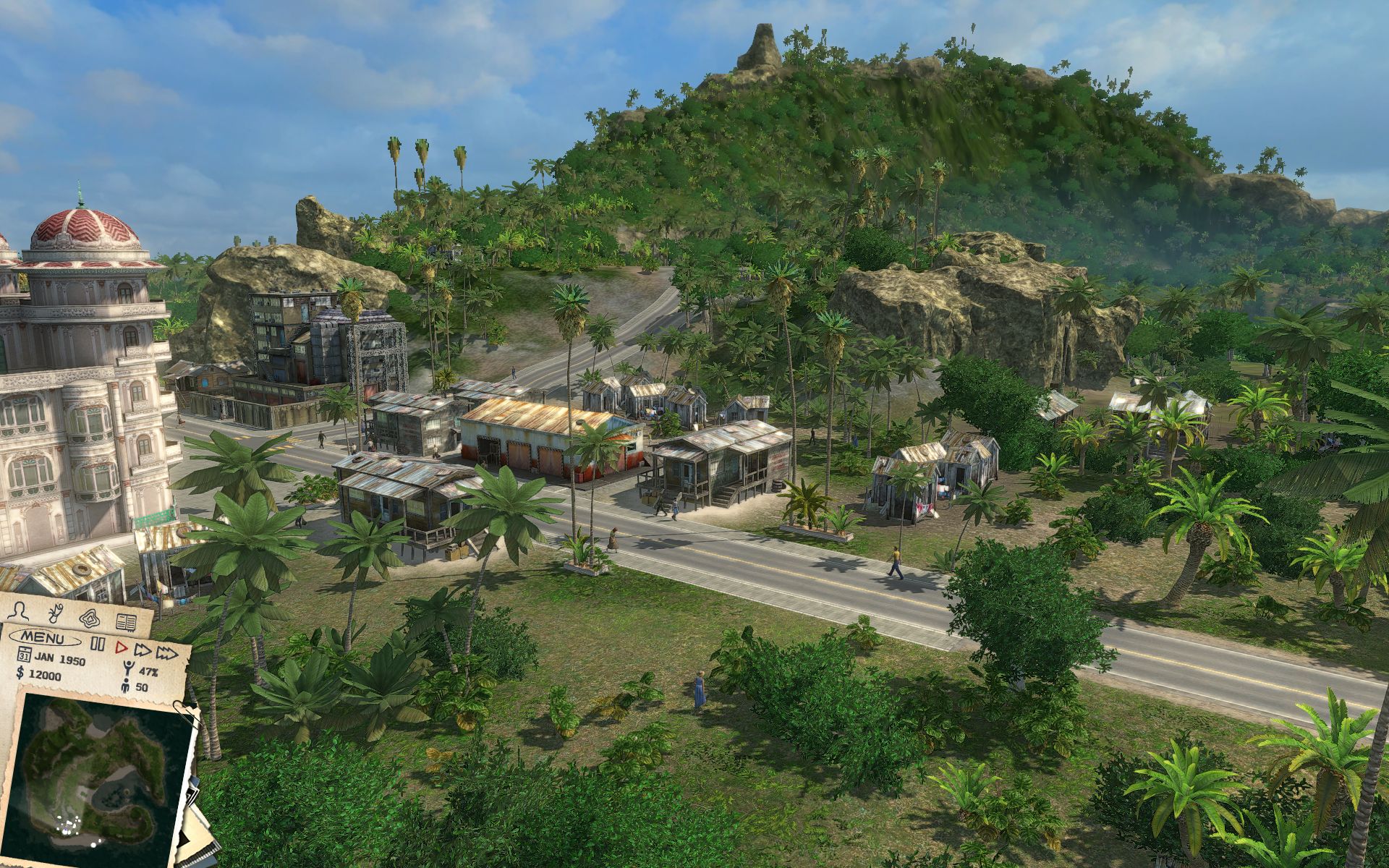
The presentation in Tropico 3 is stellar. The game looks very good and detailed, and on maxed settings can even be compared to Crysis’ vegetation and water (if it were an RTS with a top-down view) though of course it never quite reaches that level of realism. This is definitely one of the best looking strategy games in a long time, and possible the best in the city building genre. Due to the great looks though, be prepared to have some hardware to handle it. Running the now-average 8800GTX I was able to pull a steady 30 frames per second only when setting some of my post-processing effects to medium but keeping the great 1900x1200 resolution. Tropico 3 also has one of the best soundtracks in recent memory, with fun and rhythmic tropical tunes accompanying you through the game. There is also a fun-sounding DJ that will often comment on your progress with fun one-liners and quotes. The sound production is very well polished, with only possible downside is that there isn’t a huge variety of song styles so things could get repetitive after a while.
Tropico 3 is a great revamp of a classic city building that will hopefully get more spotlight in the genre than its predecessor. The original game was different and fun, and Tropico 3 keeps everything from that time and only adds new, better enhancements to the gameplay. There are minor quibbles such as difficulty scaling, lack of a good tutorial and some presentation issues, but overall it is a very fresh and enjoyable city builder. There is a demo out there, so you should definitely give it a try if you can’t wait for the next Sim City and CitiesXL doesn’t quite satisfy you with its lackluster presentation and monthly costs. If you liked the original Tropico, you should definitely pick up this title and enjoy your time in paradise.
GPU: Sapphire Radeon HD 5870 Vapor-X 1GB
RAM: 6GB DDR3
OS: Windows 7 Professional 64-bit

Share:









 Comments